Writing your first resume can feel difficult, especially when you do not have much work experience. I believe a good resume is not about having years of experience. It is about presenting your education, skills, abilities, and potential in a clear and professional way. A well written resume can help you make a strong first impression and increase your chances of getting an interview.
If you are a student, recent graduate, or someone applying for a first job, you can create a good resume even without a long employment history. The key is knowing what information to include and how to present it.
In this guide, I will explain how to write a good resume for beginners in a simple and practical way.
Understand the Purpose of a Resume
Before writing your resume, it is important to understand what a resume actually does. A resume gives an employer a quick overview of who you are, what you can do, and why you may be suitable for a particular job.
In my opinion, a resume should not tell your entire life story. It should focus on information that is relevant to the position you want. When an employer looks at your resume, they should quickly understand your education, skills, experience, and career goals.
This is why keeping your resume simple and focused is so important.
Start With Your Contact Information
The first section of your resume should contain your basic contact information. This allows an employer to contact you if they are interested in your application.
Include your full name, phone number, professional email address, city or location, and optionally a professional LinkedIn profile if you have one.
Make sure your email address looks professional. An email using your name is usually a better choice than an address containing unnecessary numbers, jokes, or nicknames.
You do not need to include personal information such as your national identification number, religion, marital status, or other details that are not relevant to the job.
Write a Strong Resume Summary
A resume summary is a short introduction near the top of your resume. For beginners, this section can be especially useful because it gives you an opportunity to explain your strengths even if you have limited work experience.
A good resume summary should mention your current situation, important skills, career interest, and what you can bring to an employer.
For example, a beginner applying for an office position might write:
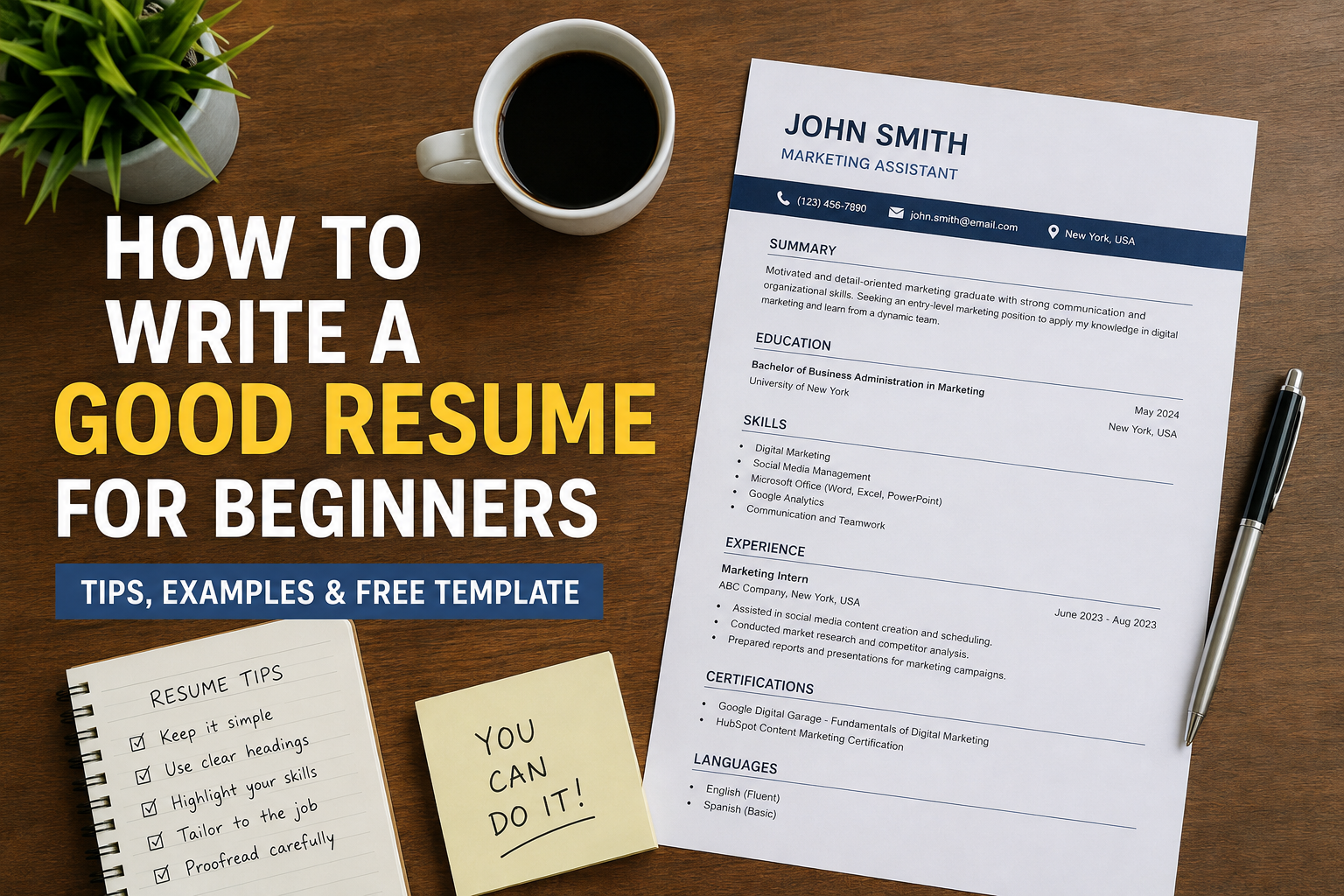
“Motivated recent graduate with strong communication, organization, and computer skills. Interested in an entry level office position where I can use my abilities, learn new skills, and contribute to a professional team.”
Keep your resume summary short. Two to four sentences are usually enough.
Focus on Your Education
If you are a beginner, your education can be one of the strongest sections of your resume. Include your degree, diploma, certificate, school or college name, and completion date.
You can also mention relevant subjects, academic achievements, projects, or activities if they are useful for the job.
For example:
Bachelor of Business Administration
ABC University
2025
Relevant coursework: Marketing, Business Communication, Management, and Computer Applications
You do not need to list every subject you studied. Choose information that supports the position you are applying for.
Highlight Your Skills
Skills are extremely important when writing a resume for beginners. Even if you have never had a full time job, you probably have useful skills.
Some common beginner resume skills include communication, teamwork, time management, problem solving, Microsoft Office, Google Workspace, customer service, social media management, research, writing, and basic computer skills.
The best approach is to read the job description carefully and identify the skills the employer is looking for. Then include the skills you genuinely have.
I recommend avoiding the habit of adding every possible skill just to make your resume look impressive. Employers value honesty, and you should be prepared to demonstrate any skill you list.
Include Internships and Volunteer Experience
One common mistake beginners make is thinking that only paid jobs count as experience. This is not true.
Internships, volunteer work, school projects, freelance work, part time jobs, and community activities can all demonstrate useful abilities.
For example, if you helped organize a college event, you may have gained communication, teamwork, planning, and leadership experience.
Instead of simply writing “Volunteer,” explain what you actually did.
For example:
Volunteer Assistant
Community Education Event
Helped organize registration and supported visitors during the event. Worked with a small team to manage schedules and answer questions.
This gives an employer a better idea of what you can do.
Describe Your Achievements
When possible, focus on achievements rather than simply listing responsibilities.
For example, instead of writing:
“Responsible for social media posts.”
You could write:
“Created and scheduled social media posts for a student organization and helped improve regular audience engagement.”
Even small achievements can make a beginner resume stronger.
If you completed an academic project, created a website, managed a college event, designed a presentation, or completed an online certification, these accomplishments may also be worth mentioning.
Use Simple Resume Formatting
A professional resume does not need complicated colors, graphics, or unusual fonts. In my opinion, simple formatting usually looks more professional.
Use clear headings and consistent spacing. Choose an easy to read font and make sure the text is large enough to read comfortably.
Keep your name noticeable at the top, followed by your contact information. Organize the rest of the resume into sections such as summary, education, skills, experience, projects, and certifications.
Avoid excessive decoration. Your goal is to make the information easy for the employer to find.
Keep Your Resume Concise
For most beginners, one page is usually enough. You do not need to fill several pages just because you want your resume to look impressive.
A short resume can be powerful when every section contains useful information.
Remove unnecessary details and repeated statements. If something does not help explain why you are suitable for the job, consider leaving it out.
As your career grows, your resume can become longer when you have more relevant experience and achievements to include.
Use Keywords From the Job Description
One of the most useful resume writing tips for beginners is to use relevant keywords from the job advertisement.
Many companies use applicant tracking systems to help organize job applications. These systems may look for skills, qualifications, job titles, and other terms related to the position.
For example, if a job description mentions “customer service,” “Microsoft Excel,” and “communication skills,” and you genuinely have these skills, consider including those exact terms in your resume.
However, do not add keywords that do not accurately describe you. Your resume should remain honest and natural.
Tailor Your Resume for Every Job
I strongly recommend avoiding the habit of sending exactly the same resume to every company.
Different jobs require different skills. A marketing position may focus on communication and social media, while an accounting position may focus more on Excel, numbers, and financial knowledge.
Before applying, read the job description and adjust your resume accordingly.
You do not have to rewrite the entire resume each time. Small changes to your summary, skills, projects, and experience can make your application more relevant.
Add Certifications and Projects
Certifications can be valuable for beginners because they show that you are willing to learn.
If you have completed relevant online courses, workshops, or professional certifications, you can create a separate certifications section.
Projects are also useful. For example, a computer science student could mention a website or software project. A marketing student could mention a marketing campaign created as part of a course.
Describe the project briefly and explain what skills you used.
Avoid Common Resume Mistakes
There are several mistakes that can make a good resume look unprofessional.
One of the biggest mistakes is spelling and grammar errors. Always proofread your resume carefully before sending it.
Another common mistake is using an unprofessional email address. Make sure your contact details are accurate.
Do not exaggerate your experience or claim skills you do not have. Also avoid long paragraphs that make your resume difficult to scan.
I also recommend checking your phone number and email address twice. A perfect resume is useless if an employer cannot contact you.
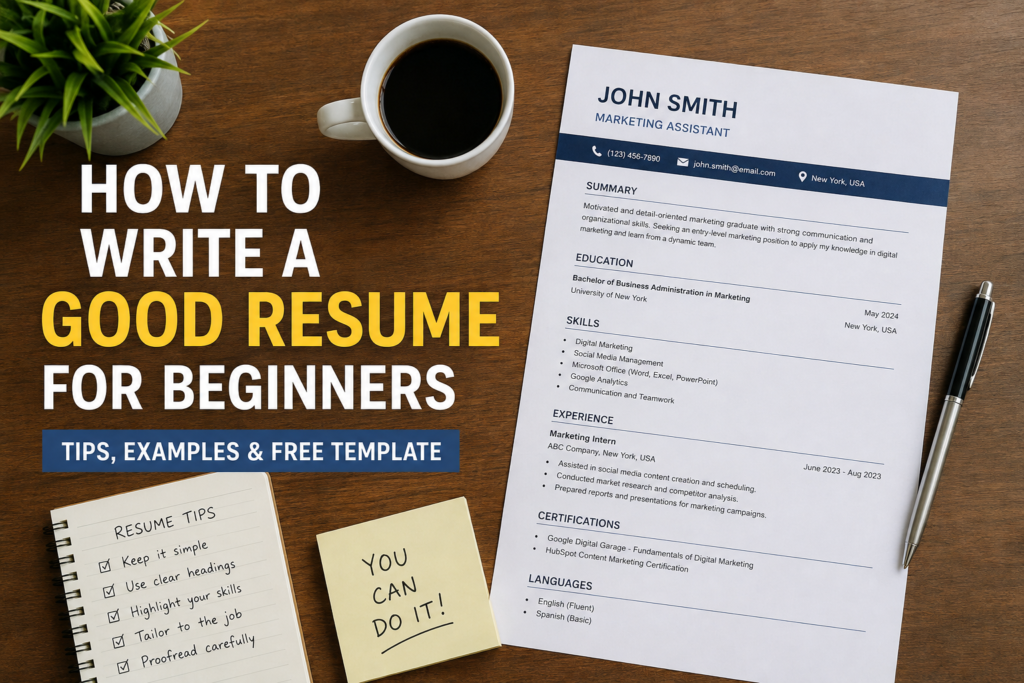
Proofread Your Resume Carefully
Before submitting your resume, read it slowly from beginning to end. Look for spelling mistakes, grammar problems, inconsistent formatting, missing dates, and incorrect contact information.
You can also ask a teacher, friend, family member, or career advisor to review it.
Reading your resume aloud can sometimes help you notice awkward sentences that you might miss while reading silently.
A few minutes of proofreading can make a significant difference.
Save Your Resume Correctly
When your resume is finished, save it with a professional file name.
Instead of using a name such as “Resume123,” use something like:
“YourName Resume”
PDF is often a useful format because it helps preserve your formatting when the document is opened on another device. However, always follow the employer’s instructions if they request a specific file format.
Final Thoughts
Learning how to write a good resume for beginners does not have to be complicated. You do not need years of experience or an impressive job history to create a strong application.
Focus on what you already have. Your education, skills, projects, internships, volunteer work, certifications, and personal achievements can all help demonstrate your potential.
From my point of view, the best beginner resume is simple, honest, relevant, and easy to read. It should quickly show an employer what you can offer and why you are interested in the position.
Take time to customize your resume for each job, use relevant keywords naturally, proofread everything, and keep the design professional. Most importantly, do not feel discouraged because you are starting your career. Everyone begins somewhere.
A good resume is simply your first opportunity to introduce yourself to an employer. Make that introduction clear, confident, and professional.