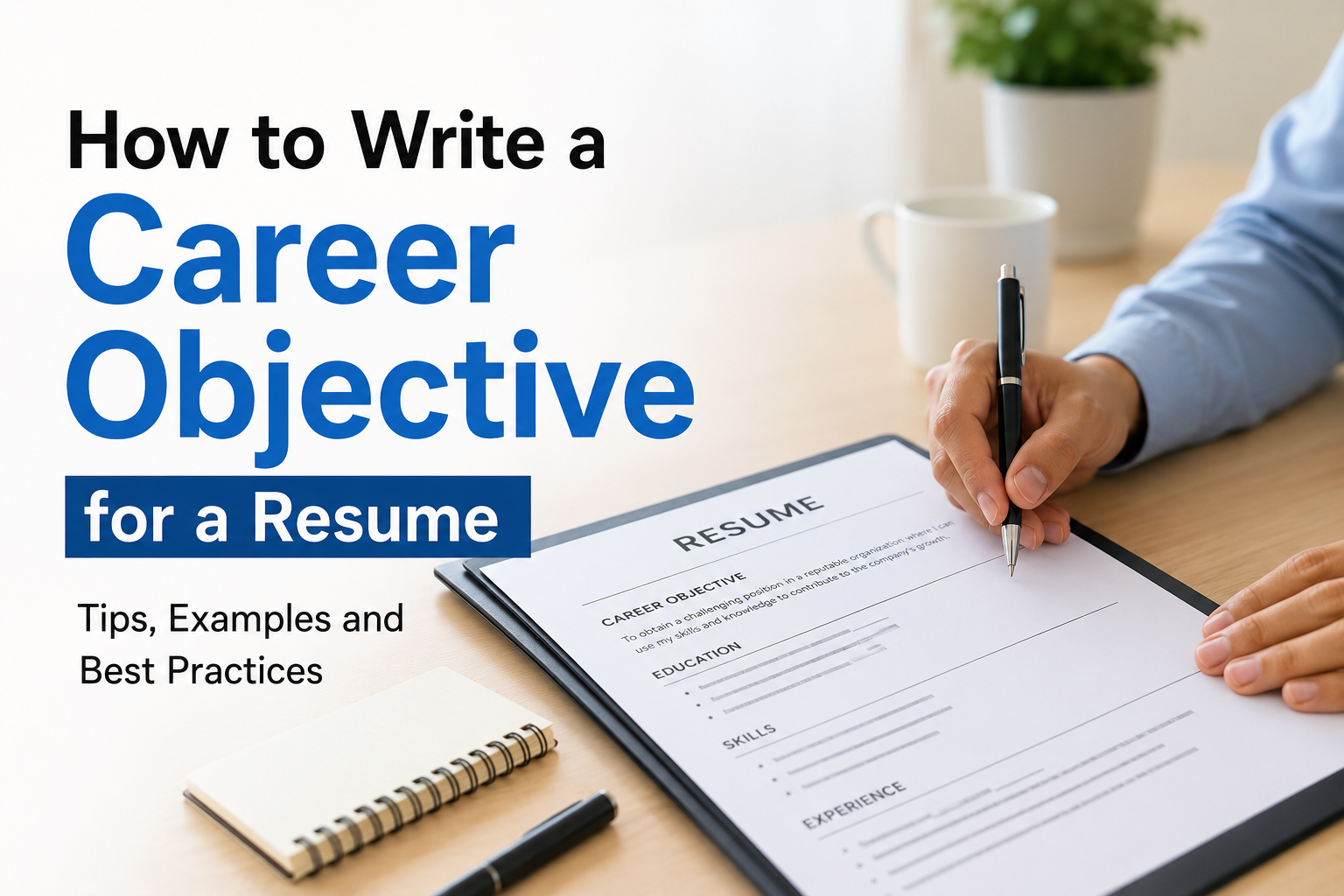
Writing a good resume can feel difficult, especially when you are applying for your first job or changing your career. In my opinion, one of the most important parts of a resume is the career objective. It is usually placed near the top of the resume, so it can give the employer a quick idea about who you are, what you can offer, and what kind of position you are looking for.
A career objective does not need to be long or complicated. A few clear and meaningful sentences can make a strong impression. The important thing is to make your objective relevant to the job and show that you understand what the employer is looking for.
In this article, I will explain how to write a career objective for a resume, what information you should include, common mistakes to avoid, and some simple examples that can help you create your own career objective.
What Is a Career Objective?
A career objective is a short statement at the beginning of a resume that explains your professional goal. It tells the employer what type of position you want and briefly highlights the skills, knowledge, or qualities that make you suitable for that position.
For example, a student applying for an entry level marketing position might write:
“Motivated graduate seeking an entry level marketing position where I can use my communication, research, and creative skills while gaining practical experience and contributing to company growth.”
This example is simple, direct, and focused on the job.
In my view, a good career objective should answer three basic questions. Who are you? What job are you looking for? What can you bring to the organization?
Why Is a Career Objective Important?
A career objective can help create a positive first impression. Employers often receive many resumes for one position, so they may only spend a short amount of time reviewing each one.
A clear career objective can quickly show your career direction and relevant strengths. This can be especially useful for fresh graduates, students, people entering the workforce, and professionals changing careers.
I believe the career objective is most useful when it is customized for the position. A general statement that could be used for every job may not have much impact. A targeted objective shows that you have taken the time to understand the role.
Keep Your Career Objective Short
One of the biggest mistakes I see when people write a resume is making the career objective too long. Your objective should be short and easy to read.
Usually, two or three sentences are enough. You do not need to explain your complete career history in this section. The rest of your resume can provide details about your education, work experience, skills, projects, and achievements.
For example:
“Hardworking business graduate seeking an entry level position in administration. I want to use my organizational, communication, and computer skills to support daily business operations while developing my professional experience.”
This objective gives enough information without becoming unnecessary or difficult to read.
Start With Your Career Background
When writing a career objective, think about your current professional situation. Are you a student? Are you a fresh graduate? Do you already have work experience? Are you changing careers?
Your answer can help you decide what to emphasize.
A fresh graduate can focus on education, skills, internships, projects, and willingness to learn. An experienced professional can focus more on industry knowledge, achievements, and transferable skills.
For example, a recent graduate might say:
“Recent computer science graduate seeking an entry level software development position where I can apply my programming knowledge and problem solving skills while gaining practical experience.”
Someone changing careers could write:
“Dedicated professional seeking to transition into digital marketing by applying strong communication, research, and customer service skills while developing expertise in online marketing.”
Mention the Position You Want
I strongly recommend mentioning the position you are applying for. This makes your career objective more specific and helps the employer understand your goal immediately.
Instead of writing:
“I am looking for a challenging position in a good company.”
You could write:
“Seeking an entry level customer service position where I can use my communication and problem solving skills to provide excellent support to customers.”
The second example is much stronger because it clearly identifies the career goal.
Highlight Relevant Skills
Your career objective should include skills that are connected to the job. Do not simply list every skill you have. Choose two or three skills that are useful for the position.
For an office job, relevant skills may include communication, organization, time management, Microsoft Office, record keeping, and teamwork.
For a teaching position, you might mention communication, classroom management, lesson planning, patience, and organization.
For a technology position, you could mention programming, problem solving, data analysis, software development, or technical knowledge.
The key is relevance. A career objective becomes more effective when the skills match the requirements of the job.
Show What You Can Offer
A career objective should not only explain what you want. It should also show what you can contribute.
For example, instead of saying:
“I want to get a job where I can learn new skills.”
You could say:
“Motivated graduate seeking an entry level administrative position where I can contribute strong organizational and communication skills while developing professional experience.”
This sounds more professional because it focuses on both learning and contribution.
Use Simple and Professional Language
I believe simple language is often better than complicated language on a resume. You do not need impressive words that make your objective difficult to understand.
Use professional words such as motivated, organized, reliable, dedicated, skilled, creative, responsible, and hardworking when they genuinely describe you.
Avoid excessive words such as “extremely amazing,” “highly extraordinary,” or similar phrases that do not provide useful information.
Your goal is to communicate clearly, not to make the career objective sound complicated.
Customize Your Career Objective
One of my most important resume writing tips is to customize your career objective for every important job application.
Before writing your objective, read the job description carefully. Look for the skills, responsibilities, and qualifications the employer mentions.
If the job description focuses on customer service, communication, and problem solving, try to naturally include those relevant skills if you actually possess them.
For example:
“Friendly and motivated graduate seeking a customer service representative position where I can use strong communication, problem solving, and interpersonal skills to provide helpful customer support.”
This is more targeted than a generic career objective.
Career Objective for Fresh Graduates
Fresh graduates often worry because they do not have much professional experience. In my opinion, this should not stop you from creating a strong resume.
Instead of focusing on what you lack, focus on your education, skills, projects, internships, and willingness to learn.
Example:
“Recent business administration graduate seeking an entry level position where I can apply my academic knowledge, communication skills, and organizational abilities while gaining practical experience and contributing to the success of the organization.”
This type of career objective works well for someone starting a professional career.
Career Objective for Students
Students can also include a career objective when applying for internships, part time jobs, or entry level positions.
For example:
“Responsible university student seeking an internship opportunity in digital marketing where I can apply my writing, research, and social media skills while gaining practical industry experience.”
The objective clearly explains the student’s situation and career interest.
Career Objective for Career Change
Changing careers can be challenging, but a good career objective can help explain your new direction.
If you are moving from one industry to another, focus on transferable skills.
For example:
“Experienced customer service professional seeking to transition into human resources by applying strong communication, organization, problem solving, and people management skills.”
This gives the employer a reason to consider your previous experience even though it comes from another field.
Career Objective for Experienced Professionals
Experienced professionals do not always need a career objective, but it can still be useful when the resume needs a clear career direction.
For example:
“Experienced accounting professional with five years of experience in financial reporting, bookkeeping, and account management seeking an accounting position where I can contribute strong analytical skills and industry knowledge.”
This objective quickly communicates experience, skills, and career goals.
Common Mistakes to Avoid
There are several mistakes that can make a career objective less effective.
The first mistake is writing a very long paragraph. Employers do not need your complete career story in the objective section.
The second mistake is using the same objective for every application. A customized objective is usually more relevant.
The third mistake is focusing only on what you want from the company. Try to explain how your skills can also benefit the employer.
Another mistake is using spelling and grammar errors. A resume represents your professionalism, so carefully check the entire document before submitting it.
You should also avoid unsupported claims. Do not describe yourself as an expert if you do not have the experience to support that statement.
Career Objective Examples
Here are a few simple examples that you can use as inspiration.
Marketing Career Objective
“Creative and motivated graduate seeking an entry level marketing position where I can use my communication, research, and content creation skills to support marketing campaigns and contribute to business growth.”
Teacher Career Objective
“Dedicated education graduate seeking a teaching position where I can use strong communication, organization, and classroom management skills to create a positive learning environment for students.”
Computer Science Career Objective
“Motivated computer science graduate seeking an entry level software development position where I can apply programming and problem solving skills while gaining practical experience.”
Administrative Career Objective
“Organized and responsible individual seeking an administrative assistant position where I can use communication, time management, and computer skills to support efficient office operations.”
Customer Service Career Objective
“Friendly and dependable professional seeking a customer service position where I can use strong communication and problem solving skills to provide helpful and professional customer support.”
Final Tips for Writing a Strong Career Objective
Before submitting your resume, I recommend checking your career objective one more time. Make sure it is short, clear, relevant, and free from grammar mistakes.
Ask yourself whether the objective clearly identifies the position you want. Check whether the skills you mention are relevant to the job. Also make sure the statement sounds natural and reflects your actual abilities.
Remember that you do not need to copy someone else’s career objective word for word. Use examples as inspiration and create a statement that matches your own background.
Final Thoughts
In my opinion, learning how to write a career objective for a resume is a small step that can make your resume more focused and professional. A strong objective tells the employer what you are looking for, highlights relevant skills, and gives a quick idea of what you can contribute.
The best career objective is not necessarily the most impressive sounding one. It is the one that is clear, honest, specific, and connected to the job you want.
Whether you are a student, fresh graduate, experienced professional, or someone changing careers, you can create an effective career objective by understanding your strengths and matching them with the position.
Keep it short, use simple professional language, focus on relevant skills, and customize it whenever possible. With these basic principles, your career objective can become a useful introduction to the rest of your resume.