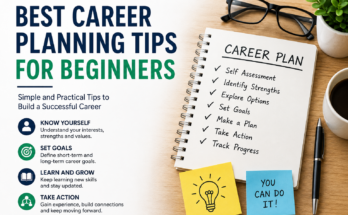
Choosing a career is one of the biggest decisions I believe we make in life. We spend a large part of our day working, so I do not think a career should only be about earning money or getting a job title that sounds impressive. A good career should also give us a sense of purpose, allow us to use our strengths, and make us feel that our time and effort are worthwhile.
The problem is that finding a career you actually enjoy is not always easy. There are hundreds of career options, and sometimes we choose a path because our family expects it, our friends are doing it, or we simply do not know what else to choose. I believe the better approach is to understand yourself first and then explore careers that match your interests, skills, values, and lifestyle.
In this article, I will share the practical steps I would follow to find a career that I could genuinely enjoy.
Understand What You Actually Enjoy
The first step in finding a career you enjoy is understanding what you like doing. This sounds simple, but many people never spend enough time thinking about it.
I would start by asking myself some basic questions. What activities make me lose track of time? What subjects do I naturally enjoy learning about? What type of work makes me feel satisfied after completing it? Do I enjoy solving problems, helping people, creating things, organizing information, working with technology, or communicating with others?
I would not focus only on hobbies. Sometimes something you enjoy can become part of your career, but not every hobby needs to become a job.
For example, someone might enjoy photography on weekends but discover that they prefer teaching photography rather than working as a professional photographer. Another person might enjoy using computers and eventually discover that software development, cybersecurity, or digital marketing suits them.
The goal is to identify patterns in what you enjoy.
Identify Your Natural Strengths
Interest is important, but I believe skills are equally important when choosing a career.
Think about the things you are naturally good at. Maybe you are good at explaining complicated ideas. Perhaps you are organized, creative, analytical, patient, persuasive, or comfortable working with numbers.
I would make a simple list of my strongest abilities and then compare those abilities with different careers.
For example, if you are good at communication and enjoy helping people, careers involving teaching, customer support, sales, human resources, or counseling may be worth exploring.
If you enjoy solving technical problems, you might explore careers related to information technology, software, engineering, data, or cybersecurity.
Your strengths do not have to be perfect at the beginning. Many professional skills can be developed through education and experience. What matters is finding an area where you are willing to improve.
Think About Your Values
One thing I think people often overlook when choosing a career is personal values.
A job can look excellent on paper and still make you unhappy if it conflicts with what matters to you.
Ask yourself what you value most. Is financial security important to you? Do you want flexibility? Do you want to help other people? Do you prefer independence? Is creativity important? Do you want a predictable schedule or an exciting environment?
For me, understanding these values would help narrow down career choices.
Someone who strongly values flexibility may enjoy remote work or freelancing. Someone who values stability may prefer a traditional organization with predictable responsibilities. Someone who wants to make a social impact might prefer education, community work, healthcare, or nonprofit careers.
There is no universal definition of a perfect career. The right career depends on the person.
Consider the Lifestyle You Want
A career does not exist separately from the rest of your life. Your work affects your schedule, income, location, stress level, and free time.
That is why I would think about my ideal lifestyle before choosing a career.
Would I prefer working from home or going to an office? Do I want regular working hours or flexible hours? Would I enjoy traveling for work? Do I want to work independently or as part of a team?
These questions can make career planning much easier.
For example, two careers may both match your skills, but one might require long and irregular working hours while the other offers more flexibility. If lifestyle is important to you, that difference can have a major effect on your satisfaction.
Do Not Choose a Career Only for Money
Money matters. I believe everyone should consider income, financial security, and future opportunities when choosing a career.
However, I would not choose a career based only on salary.
A high paying career may look attractive at first, but if you strongly dislike the daily work, you may eventually feel stressed and dissatisfied. On the other hand, choosing a career with extremely low earning potential without considering your financial responsibilities can also create problems.
The better approach is to find a balance between enjoyment, skills, opportunities, and financial needs.
I would look for careers that I find interesting while also researching their earning potential, job demand, growth opportunities, and requirements.
Research Different Career Options
Once you understand your interests and strengths, start researching actual career options.
I would not choose the first career that sounds interesting. Instead, I would create a list of several possibilities.
For every career, I would research questions such as:
What does a person in this career actually do every day?
What education or training is required?
What skills are important?
What does the typical work environment look like?
What are the possible career growth opportunities?
What challenges are common in this field?
What is the expected income range?
Is the industry growing or changing?
This research can completely change your perspective. Sometimes a career sounds exciting until you learn what the daily responsibilities are. Other times, a career you never considered can turn out to be a surprisingly good fit.
Talk to People Who Already Do the Work
One of the most useful things I would recommend is speaking with people who already work in careers you are considering.
Online articles can provide useful information, but someone working in the field can tell you what the job is really like.
Ask them about their typical day, biggest challenges, favorite parts of the job, required skills, and advice for beginners.
You can also use professional networking platforms, local communities, career events, or educational groups to connect with people.
I think real conversations can save a lot of time because they give you practical information that may not appear in a job description.
Try Before You Fully Commit
I do not believe you always need to make a huge commitment before discovering whether you enjoy something.
If you are interested in writing, start a small blog. If you are interested in programming, build a simple project. If you are interested in marketing, help a small business with its online presence. If teaching interests you, try tutoring.
These small experiments can tell you a lot.
You may discover that you love the subject but dislike the actual work. You may also discover that you enjoy it more than you expected.
This is why I think career experiments are extremely valuable.
Learn the Skills You Need
After identifying a promising career, find out which skills you need to develop.
You do not necessarily need to return to school immediately. Depending on the career, you may be able to learn through online courses, books, tutorials, workshops, certifications, internships, or personal projects.
I would focus on practical skills rather than collecting certificates without applying what I learn.
For example, if you want to enter digital marketing, learning about SEO, content creation, analytics, and social media is useful. But creating a small website and applying those skills can teach you much more than simply watching lessons.
The combination of knowledge and practical experience can make career development much easier.
Pay Attention to What Drains You
Finding a career you enjoy is not only about identifying what you like. It is also about recognizing what consistently drains you.
Maybe you dislike sitting alone for long periods. Perhaps you hate repetitive tasks. Maybe constant social interaction makes you tired. Or you may dislike environments where everything changes quickly.
There is nothing wrong with these preferences.
Understanding what you do not enjoy can help eliminate unsuitable careers. I think this is just as valuable as discovering your interests.
Do Not Expect to Love Every Day
I also believe it is important to have realistic expectations.
A career you enjoy will still have difficult days. Every job has boring tasks, deadlines, mistakes, difficult people, and stressful periods.
The goal is not to find a career where every moment is enjoyable.
Instead, I would look for work where the positive parts are meaningful enough that the difficult parts feel manageable.
A good career should generally make you feel interested, useful, challenged, or satisfied more often than it makes you feel completely disconnected from the work.

Give Yourself Permission to Change
Your first career choice does not have to be your final career choice.
People change. Their interests change, their responsibilities change, and new opportunities appear.
You might start in one industry and later discover another area that suits you better. That does not mean your earlier decision was a failure.
The skills and experience you gain from one career can often help you move into another.
I think career development should be viewed as a journey rather than a single decision you make at a young age.
Create a Simple Career Plan
Once you have identified a career that seems promising, create a realistic plan.
Write down the career you are interested in, the skills you need, the education or training required, and the first practical step you can take.
For example, your plan might look like this:
Learn the basics of the field.
Complete a beginner course.
Practice the most important skills.
Create two or three practical projects.
Connect with professionals.
Apply for an internship or entry level position.
Review your progress after several months.
Having a clear plan can make an uncertain career decision feel much more manageable.
Final Thoughts
Finding a career you actually enjoy takes time. I do not think there is one personality test, website, or piece of advice that can instantly tell you what career is perfect for you.
The best approach, in my opinion, is to understand yourself, explore different career options, research the reality of each field, speak with experienced people, and try things before making major commitments.
Do not focus only on salary, job titles, or what other people think you should do. Think about your interests, strengths, values, lifestyle, financial needs, and the type of work you can imagine doing for several years.
Most importantly, give yourself permission to learn and change along the way. A career is not just about finding a job. It is about building a working life that fits who you are and what you want from your future.
If you take the time to explore yourself and the opportunities around you, finding a career you actually enjoy becomes much more realistic.