Choosing the right career is one of the biggest decisions we make in life. I believe a career should be more than just a way to earn money. It should give you opportunities to use your abilities, develop new skills, learn from experience, and build a future that feels meaningful to you.
Many people choose a career because their friends are doing it, their family recommends it, or they hear that a particular field pays well. While these things can be useful to consider, they should not be the only reasons behind such an important decision. The right career should match your skills, interests, personality, goals, and expectations.
If you are confused about which career path to choose, do not worry. You do not need to have everything figured out immediately. In my opinion, the best way to choose a career is to understand yourself first and then explore the opportunities that match your strengths.
Understand Your Skills First
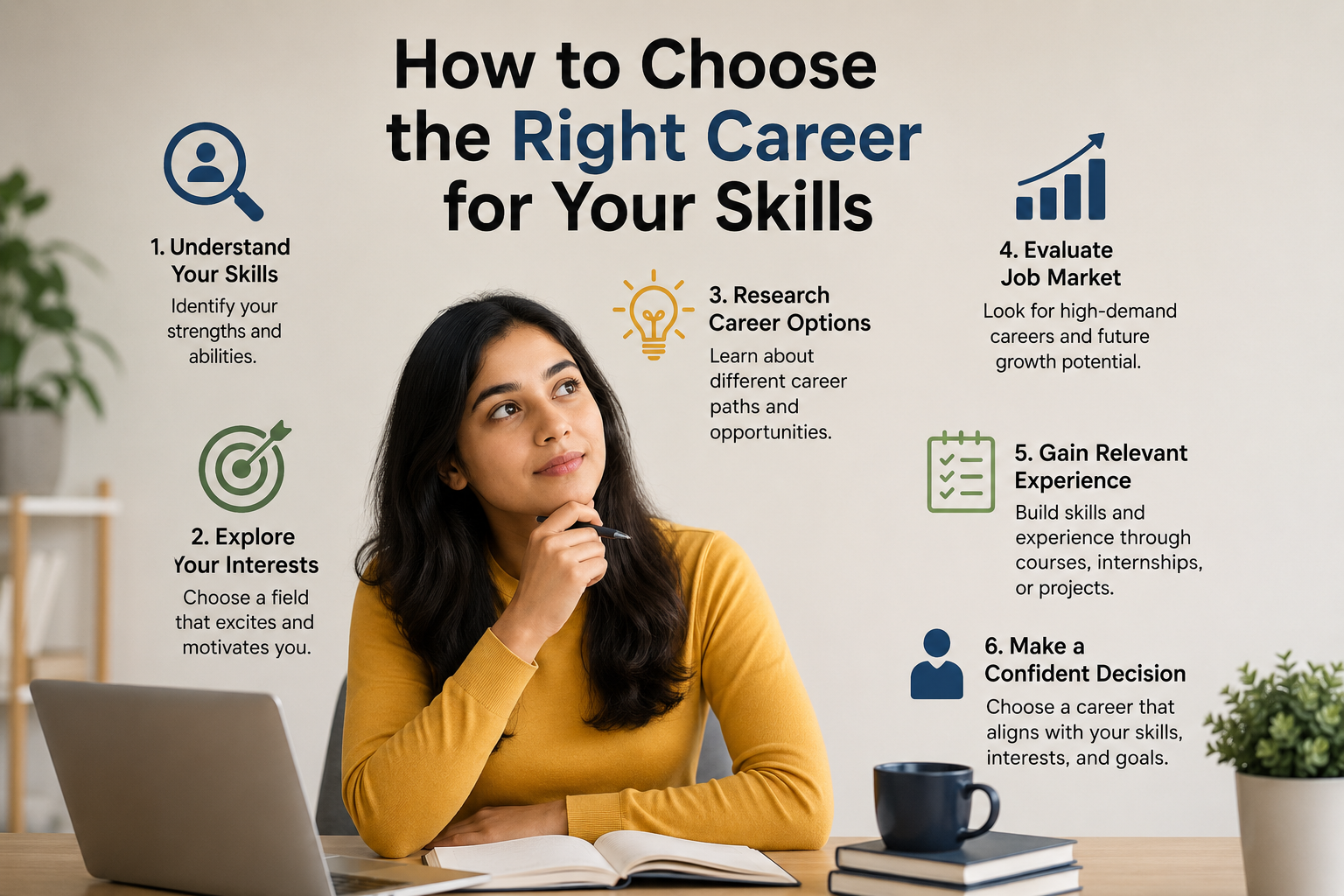
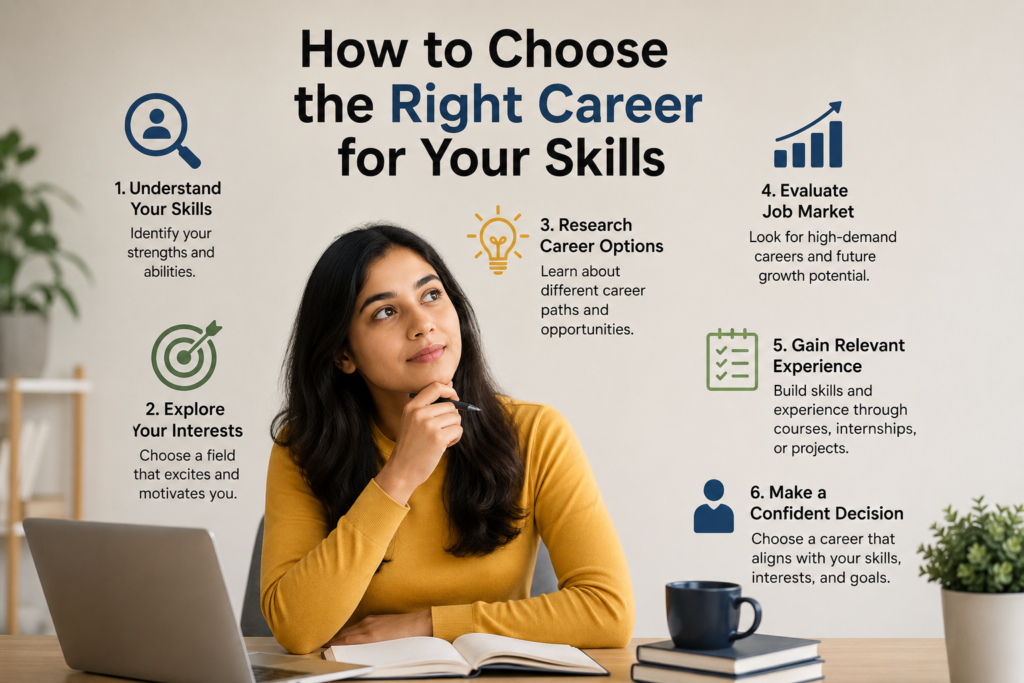
The first step in choosing the right career is understanding your skills. Before looking at job titles or salaries, take some time to think about what you are naturally good at.
Skills can be different for everyone. Some people are good at writing, while others are comfortable with numbers. Some enjoy solving technical problems, while others are excellent at communicating with people. You might have strong organizational skills, creative skills, leadership abilities, computer skills, research skills, or practical abilities.
I recommend making a simple list of the things you can do well. Think about your school, college, previous work, hobbies, personal projects, and everyday activities.
For example, if you enjoy explaining difficult topics to other people, teaching, training, communication, or content related careers might be worth exploring. If you enjoy analyzing information and solving problems, technology, finance, research, or business related careers could be suitable.
Understanding your skills gives you a starting point for finding a career that fits you.
Identify the Skills You Enjoy Using
Being good at something does not always mean you want to do it as a career. This is an important point that I think many people overlook.
You may be excellent at mathematics but dislike working with numbers for several hours every day. You may be good at talking to people but prefer working independently. This is why you should consider both your abilities and your preferences.
Ask yourself questions such as:
What activities make me feel interested?
What tasks do I enjoy completing?
What subjects do I naturally want to learn more about?
What type of work makes me feel productive?
What skills do I enjoy improving?
The answers can help you identify careers that are not only suitable for your abilities but also enjoyable enough to pursue long term.
Consider Your Interests
Your interests can play a major role when choosing the right career. When you are genuinely interested in a subject, learning and improving can become easier.
For example, someone who loves technology might explore careers such as software development, cybersecurity, technical support, data analysis, or digital product management. Someone interested in writing could consider content writing, journalism, editing, copywriting, or communications.
However, I do not recommend choosing a career based only on a hobby. A hobby can become a career, but it is important to research the actual work involved.
Sometimes we enjoy the idea of a profession without understanding what professionals actually do every day. Therefore, learn about the daily responsibilities before making a final decision.
Match Your Skills With Career Options
Once you understand your skills and interests, start connecting them with possible career paths.
You do not have to choose only one career immediately. Create a shortlist of several options. For example, if you have communication, writing, and organizational skills, your list could include marketing, public relations, content creation, teaching, human resources, or project coordination.
Then compare these careers based on the skills they require.
Look at the typical responsibilities, education requirements, entry level opportunities, earning potential, working environment, and opportunities for growth.
This approach can make career planning much easier because you are comparing realistic options instead of making a decision based on a single job title.
Research the Career Before Choosing It
Good career research can save you from making an unsuitable decision.
I believe you should learn as much as possible about a career before investing significant time and money into it. Read job descriptions, watch professional interviews, explore educational requirements, and look at the skills employers commonly request.
Try to understand what a normal working day looks like in that profession.
For example, someone might think that working in technology means sitting at a computer and creating interesting projects all day. In reality, many technology careers also involve meetings, documentation, troubleshooting, deadlines, teamwork, and continuous learning.
Understanding the reality of a career can help you decide whether it actually suits you.
Think About Your Personality
Your personality can also influence your career choice.
Some people enjoy teamwork and social interaction, while others prefer independent work. Some people like predictable routines, while others enjoy changing environments and new challenges.
If you are naturally organized and enjoy managing tasks, project based careers may interest you. If you enjoy helping people and communicating, customer service, teaching, counseling, or human resources might be worth exploring.
There is no perfect personality for every career. The important thing is to understand the type of working environment where you are most comfortable and productive.
Consider Your Career Goals
Your long term goals should also be part of your decision.
Think about where you want to be five or ten years from now. You do not need to predict your entire future, but having a general direction can help.
Ask yourself whether you want a career with leadership opportunities, flexibility, creativity, stable working hours, remote work possibilities, business opportunities, or continuous learning.
Your priorities may also change as you grow. That is completely normal. A career choice does not have to become a permanent decision for the rest of your life.
Look at the Job Market
Skills and interests are important, but the job market also matters.
Before choosing a career, research whether there is demand for those skills. Look at current job opportunities, industry trends, required qualifications, and potential career growth.
I would not recommend choosing a career only because it is currently popular. Trends can change. Instead, look for careers where your skills can remain useful and where there are opportunities to learn and adapt.
For example, digital skills are becoming valuable across many industries. Communication, problem solving, analytical thinking, creativity, and adaptability can also be useful in different types of work.
The goal is to find a balance between what you are good at, what you enjoy, and what employers need.
Gain Practical Experience
One of the best ways to discover whether a career is right for you is to gain practical experience.
You can start with small projects, internships, volunteering, online courses, freelance work, or personal projects. Practical experience gives you a better understanding of what the work actually feels like.
For example, if you are interested in writing, try creating articles or managing a small blog. If you are interested in programming, build a simple website or application. If you are interested in marketing, experiment with creating content and studying basic marketing strategies.
You do not have to wait for a full time job to test your interests.
Talk to People in the Field
Another useful step is speaking with people who already work in careers you are considering.
Ask them about their daily responsibilities, challenges, required skills, education, career progression, and what they wish they had known before starting.
Real world experiences can provide information that you may not find in general career guides.
You can also use professional communities, networking events, educational groups, and online platforms to learn from people working in different industries.
Do Not Choose a Career Only for Money
Salary is obviously important because everyone needs financial stability. However, I do not think money should be the only factor when choosing a career.
A high paying career may not be suitable if you strongly dislike the work, working environment, or lifestyle associated with it.
At the same time, following your passion without considering financial opportunities can also create problems.
I believe the better approach is to find a balance. Look for a career where your skills are valuable, the income potential is reasonable, the work interests you, and the lifestyle fits your goals.
Keep Improving Your Skills
Choosing the right career does not mean your learning ends after getting a job.
The modern workplace changes constantly. New technologies, tools, and working methods can create new opportunities and make some skills less valuable.
That is why continuous learning is important.
Improve both technical and soft skills. Communication, teamwork, problem solving, time management, adaptability, and critical thinking can benefit you in almost any profession.
The more useful skills you develop, the more career options you may have in the future.
Avoid Comparing Your Career With Others
It is easy to compare yourself with friends, classmates, relatives, or people you see online. Someone may get a job earlier than you, earn more money, or appear more successful.
But everyone has a different starting point and different goals.
Your career should be based on your own skills, interests, circumstances, and ambitions. Someone else’s successful career does not automatically mean it is the right career for you.
Take your time and focus on building your own path.
Make a Career Decision With Confidence
After researching your options, create a shortlist and compare each career carefully.
Consider your skills, interests, personality, education requirements, job opportunities, earning potential, lifestyle, and future growth.
You do not need complete certainty before making a decision. Sometimes you only discover whether a career is right for you after gaining real experience.
The important thing is to make an informed decision rather than choosing randomly.
Final Thoughts
Choosing the right career for your skills is a process of understanding yourself and exploring the opportunities around you. In my view, the best career choice comes from finding a practical balance between your abilities, interests, goals, personality, and the needs of the job market.
Start by identifying what you are good at. Then think about what you enjoy, research suitable careers, talk to professionals, and gain practical experience whenever possible.
Most importantly, remember that your first career decision does not have to define your entire life. People learn new skills, discover new interests, and change careers all the time.
If you focus on developing valuable skills and making thoughtful decisions, you can create a career path that supports both your professional growth and personal goals.
Primary SEO Keyword: How to choose the right career for your skills
Related Keywords: choosing the right career, career choice based on skills, career planning for beginners, finding the right career, best career for my skills, career options based on skills, career guidance, choosing a career path, skills for career success