Getting your first job can feel exciting and confusing at the same time. When I was learning about job applications, one thing I noticed was that many beginners worry too much about having a long resume. In my opinion, a simple resume is often better, especially when you do not have much work experience.
A resume is your first introduction to a potential employer. It tells the employer who you are, what you have studied, what skills you have, and why you could be a good fit for the position. You do not need years of experience to create a strong resume. You just need to present your education, skills, achievements, and abilities in a clear and honest way.
In this article, I will explain how to make a simple resume for your first job and share some practical tips that can help you create a professional resume even if you have no previous work experience.
Start With Your Contact Information
The first section of your resume should contain your basic contact information. I believe this part should always be simple and easy to find because the employer needs a quick way to contact you.
Write your full name at the top of the page. Under your name, include your phone number, professional email address, city, and optionally a link to your professional online profile if you have one.
For example:
Your Name
Phone Number
Professional Email Address
City, Country
LinkedIn or Professional Profile
Make sure your email address looks professional. If your current email contains funny words, nicknames, or unnecessary numbers, I recommend creating a simple email address using your name.
You should also check your phone number and email address carefully before sending your resume. A small mistake in your contact information could make it difficult for an employer to reach you.
Write a Short Career Objective
Since this is your first job, you may not have professional experience to discuss. This is where a short career objective can be useful.
A career objective should explain what kind of opportunity you are looking for and what you can bring to the company. Keep it short and specific.
For example:
“Motivated and hardworking recent graduate seeking an entry level position where I can use my communication, teamwork, and computer skills while learning new professional skills.”
In my opinion, you should avoid writing a very general objective that could apply to every job. Try to adjust your objective according to the position you are applying for.
If you are applying for an office assistant position, you can mention organization and computer skills. If you are applying for a customer service job, you can highlight communication and problem solving skills.
Add Your Education
For a first job resume, education can be one of your strongest sections. If you do not have much professional experience, your education can show employers your background and areas of knowledge.
Start with your most recent qualification. Include the name of your degree, diploma, school, college, or university and the year you completed it or expect to complete it.
You can also mention relevant courses if they are connected to the job.
For example:
Bachelor of Business Administration
ABC University
2026
If you achieved good grades, received an academic award, or completed an important academic project, you can mention it when it is relevant.
I recommend avoiding unnecessary information. Your resume should focus on details that help the employer understand your abilities.
Highlight Your Skills
Skills are extremely important when you are creating a resume for your first job. Even without work experience, you probably have useful skills that you have developed through education, projects, volunteering, personal activities, or everyday responsibilities.
Some useful skills may include communication, teamwork, time management, problem solving, computer skills, research, organization, writing, customer service, leadership, and basic knowledge of Microsoft Office.
However, do not simply copy a long list of skills from the internet. Choose skills that you genuinely have and that match the job description.
For example, if the employer is looking for someone who can work with spreadsheets, mentioning Microsoft Excel can be useful if you actually know how to use it.
I believe honesty is very important here. Never claim that you are an expert at something when you have little or no knowledge of it. Employers may test your skills during an interview.
Include Projects and Practical Experience
One common mistake I see among beginners is thinking that only paid jobs count as experience. That is not true.
If you have completed school projects, university assignments, personal projects, volunteer work, internships, freelance work, or community activities, you may be able to include them in your resume.
For example, a student applying for a marketing position could mention a university project where they created a social media marketing plan.
You could write:
Academic Marketing Project
Created a basic marketing plan for a student project and researched customer preferences. Worked with a small team to prepare a presentation and explain the project results.
This gives the employer evidence that you can actually use your knowledge.
If you have completed an internship, include the organization, your role, dates, and a few responsibilities or achievements.
Mention Certifications and Online Courses
If you have completed relevant online courses or professional certifications, you can add them to your first job resume.
For example, you might have completed courses in Microsoft Office, digital marketing, graphic design, communication, programming, data analysis, or another area related to your desired career.
Only include certifications that are relevant or useful. A resume does not become better simply because it contains many certificates.
In my opinion, quality is more important than quantity. One useful course related to the job can be more valuable than ten unrelated certificates.
Keep Your Resume Simple and Professional
When creating a simple resume for your first job, design matters, but you do not need an expensive or complicated template.
I recommend using a clean layout with clear headings and enough white space. Choose an easy to read font and keep the formatting consistent throughout the document.
For most entry level positions, one page is enough. If you have a lot of relevant information, your resume can be longer, but beginners should generally avoid filling pages with unnecessary details.
Avoid excessive colors, decorative graphics, unusual fonts, and complicated designs. A professional resume should make your information easy to read.
Use Keywords From the Job Description
If you want your resume to perform better during online applications, pay attention to keywords in the job advertisement.
Many companies use applicant tracking systems to organize resumes before a recruiter reviews them. Using relevant terms from the job description can help your resume communicate that you have the skills the employer is looking for.
For example, if a job description mentions “customer service,” “communication,” “Microsoft Excel,” and “teamwork,” you can naturally include those terms in your resume if they genuinely describe your abilities.
Do not stuff your resume with keywords. Write naturally and only mention skills you actually possess.
Focus on Achievements When Possible
Even if you have never had a formal job, you may have achievements worth mentioning.
Maybe you organized a college event, led a student group, completed a difficult project, won a competition, volunteered for an organization, or created something independently.
Instead of only saying what you did, explain the result when possible.
For example, instead of writing “Helped organize a college event,” you could write “Helped organize a college event for students and coordinated registration activities with a small team.”
This gives the employer a better idea of your abilities.
Check Your Grammar and Spelling
A professional resume should be carefully checked before you send it.
A spelling mistake may look small, but it can create a negative impression, especially when applying for jobs that require writing or communication skills.
Read your resume several times. Check names, dates, phone numbers, email addresses, headings, grammar, and punctuation.
You can also ask a teacher, friend, or family member to read it. Sometimes another person can notice mistakes that you have missed.
Customize Your Resume for Each Job
I do not recommend sending exactly the same resume to every company.
Your basic resume can stay the same, but you should make small changes based on the job. Read the job description carefully and highlight the education, skills, projects, and experience that are most relevant.
For example, if you are applying for a sales position, communication and customer service skills may deserve more attention. If you are applying for an office position, organization, computer skills, and attention to detail may be more important.
A customized resume shows that you have taken time to understand the position.
Save Your Resume in the Right Format
Before sending your resume, save it in a professional format. PDF is often a good choice because it helps preserve the layout when the employer opens the document.
Use a clear file name such as:
YourName_Resume.pdf
Avoid names such as “resume final new latest 2.pdf” because they look less professional.
Before submitting the application, open the PDF and make sure everything looks correct.
What You Should Not Put on Your Resume
When making a simple resume for your first job, you should also know what to leave out.
Avoid unnecessary personal information, exaggerated claims, irrelevant hobbies, long paragraphs, and information that does not support your application.
You generally do not need to include your entire life story. Your resume should quickly communicate why you could be a suitable candidate.
Also, never provide false information about your education, experience, or skills. A resume should represent you honestly.
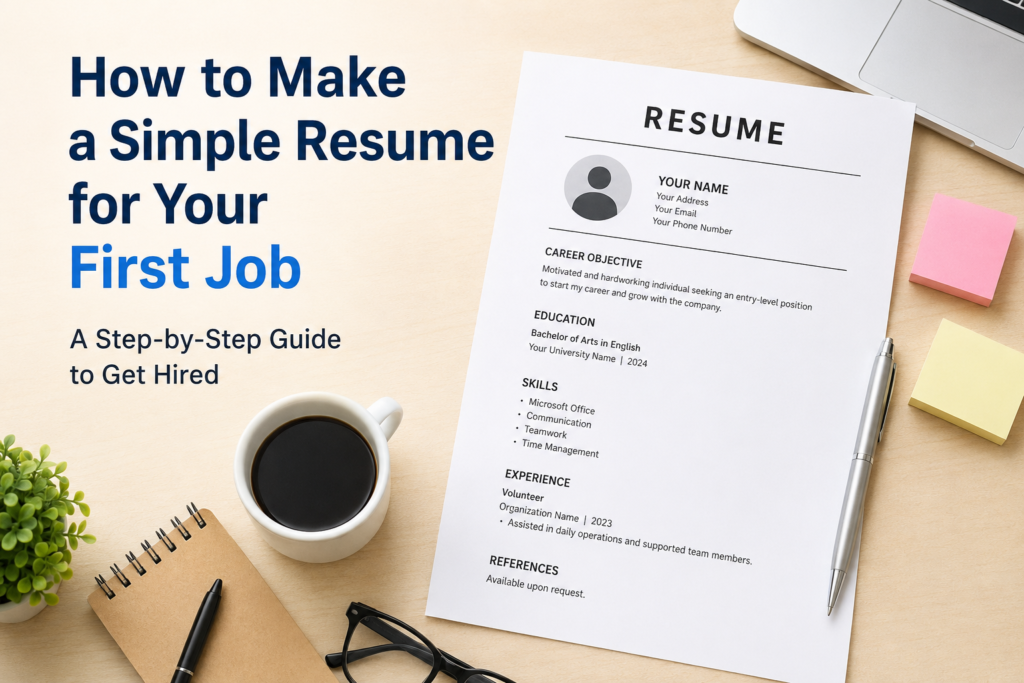
Simple Resume Structure for a First Job
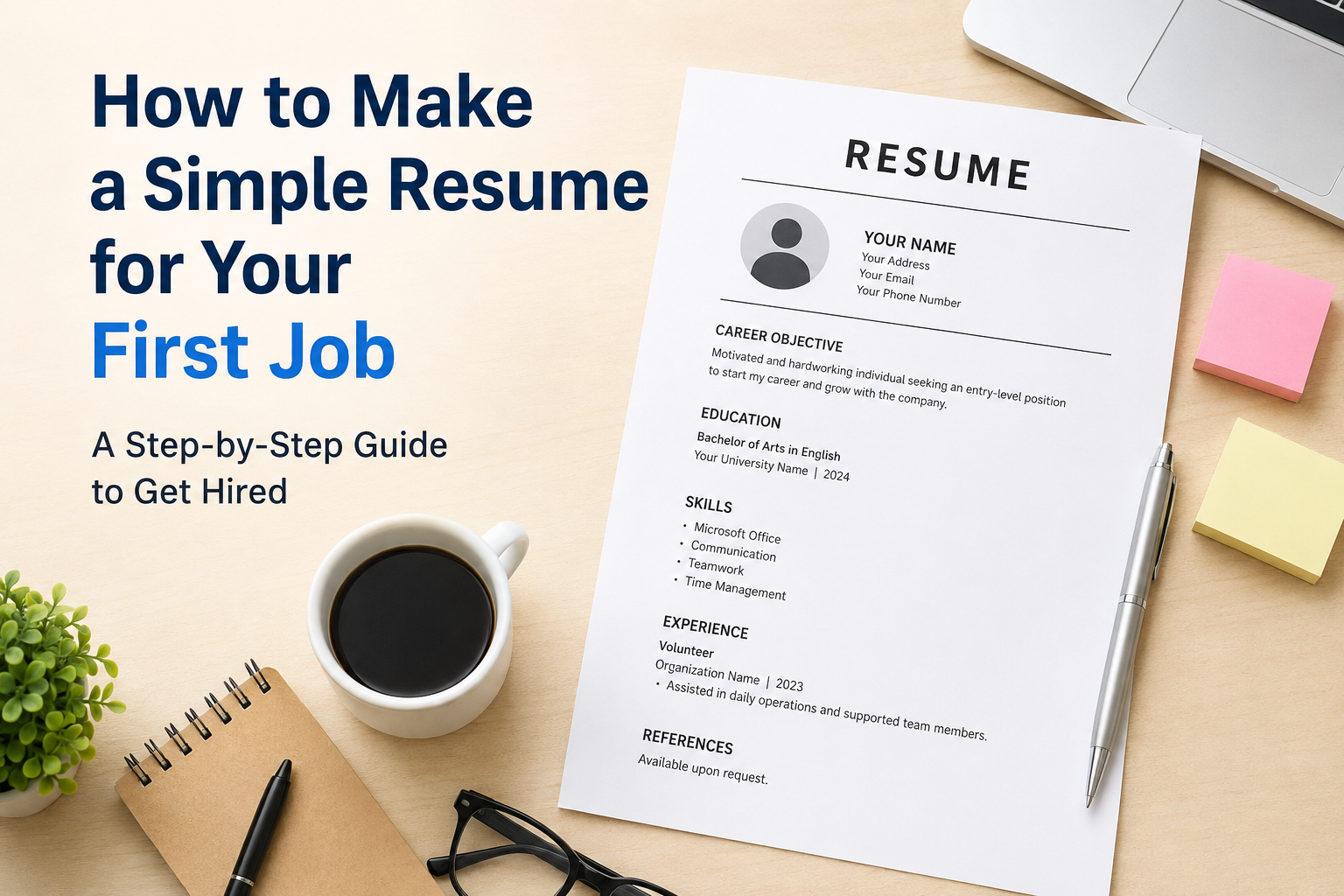
If you are unsure how to organize everything, I recommend using this simple structure:
Your Name and Contact Information
Career Objective
Education
Skills
Projects or Practical Experience
Internships or Volunteer Experience
Certifications and Courses
Achievements
References, if requested
You do not necessarily need every section. Choose the sections that are relevant to your background.
Final Thoughts
Making a resume for your first job does not have to be difficult. In my view, the most important thing is to keep it honest, simple, clear, and relevant to the position you want.
You may not have years of professional experience, but that does not mean you have nothing valuable to offer. Your education, skills, projects, certifications, volunteer activities, and personal achievements can all help you create a strong first job resume.
Take your time when writing it. Read the job description carefully, use relevant keywords naturally, check your grammar, and make sure your contact information is correct.
Your first resume does not need to be perfect. It is the beginning of your professional journey. As you gain experience and develop new skills, you can continue improving it. The goal of a simple resume is not to tell your entire story. It is to make the employer interested enough to invite you for the next step.
If you keep your resume focused and professional, you will have a much better starting point when applying for your first job.