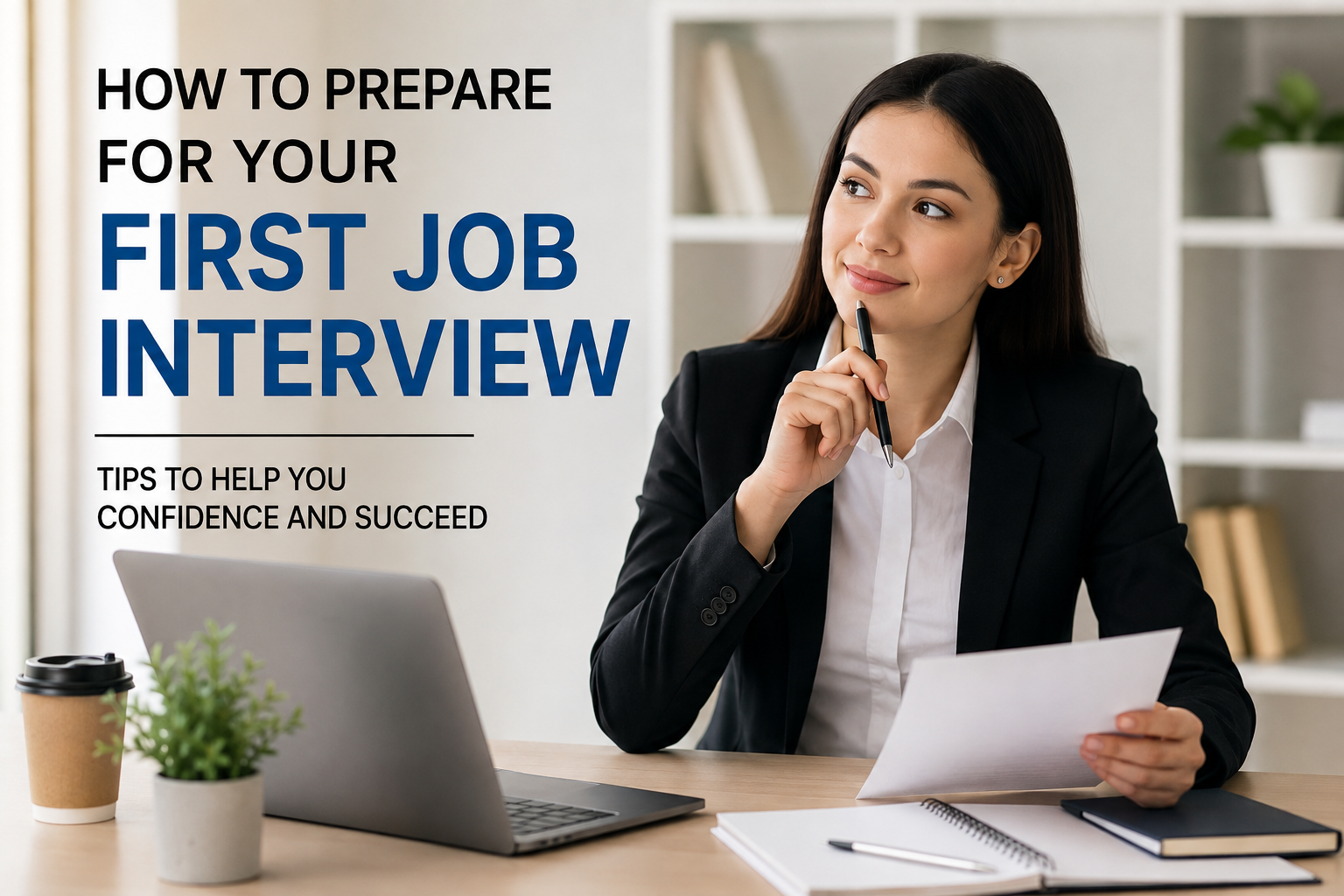
Preparing for your first job interview can feel exciting and a little stressful at the same time. I remember that the hardest part is often not knowing what the interviewer will ask or how I should present myself. The good thing is that proper preparation can make the whole experience much easier. In my opinion, you do not need to be perfect to perform well in your first interview. You simply need to understand the job, know your strengths, communicate clearly, and show that you are willing to learn.
A first job interview is not only about answering questions. It is also an opportunity to show your personality, confidence, attitude, and interest in the position. In this article, I will share practical job interview preparation tips that can help beginners feel more confident and ready.
Understand the Job Description
The first thing I recommend doing before a job interview is reading the job description carefully. Many candidates make the mistake of applying for a position and then forgetting the exact requirements.
I like to review the responsibilities, required skills, qualifications, and experience mentioned in the job posting. This helps me understand what the employer is actually looking for.
If the position requires communication skills, computer knowledge, teamwork, customer service, or problem solving, think about examples from your education, projects, volunteer activities, internships, or daily life that demonstrate these abilities.
Even if you have no professional experience, you can still show that you have relevant skills. Your school projects, university assignments, personal projects, and extracurricular activities can provide useful examples.
Research the Company
Company research is one of the most important parts of interview preparation. Before attending an interview, I always believe it is worth spending some time learning about the company.
Visit the company website and understand what it does, what products or services it offers, and what type of customers it serves. You can also learn about its values and recent activities.
This research helps you answer questions more naturally. If an interviewer asks why you want to work there, you can give a specific answer instead of simply saying that you need a job.
For example, you might explain that you are interested in the company because its work matches your skills and because you would like to develop your experience in that field.
Prepare Your Introduction
One of the first questions in a job interview is often, “Tell me about yourself.” For a first time job seeker, this question can feel difficult.
I recommend preparing a short introduction before the interview. It should include who you are, your educational background, relevant skills, interests related to the position, and what you hope to learn.
You do not need to memorize every sentence. Instead, understand the main points you want to communicate.
A simple introduction could explain that you recently completed your studies, developed an interest in a particular field, worked on certain projects, and are now looking for an opportunity where you can apply your skills and continue learning.
Practice Common Interview Questions
Practicing common interview questions is one of the easiest ways to improve your confidence. I would suggest preparing answers for questions such as:
Tell me about yourself.
Why do you want this job?
Why do you want to work for our company?
What are your strengths?
What is one area you are trying to improve?
Where do you see yourself in the future?
Why should we hire you?
How do you handle pressure?
Tell me about a time you solved a problem.
Do you prefer working independently or with a team?
You do not need to prepare complicated answers. The goal is to become comfortable speaking about yourself.
Use Real Examples
When answering interview questions, I believe examples make your answers much stronger. Instead of simply saying that you are a good team player, explain a situation where you worked successfully with other people.
For example, you could talk about a university project where several students had different responsibilities. Explain what your role was, what problem appeared, and how the team completed the project.
You can use examples from education, internships, volunteer work, part time activities, or personal projects. Your first job interview does not require you to have years of professional experience.
Be Honest About Your Experience
If you are preparing for your first job interview, you may worry about having little or no work experience. In my opinion, this is nothing to be embarrassed about.
Never invent experience just to impress an interviewer. Employers can usually recognize when someone is exaggerating.
Instead, focus on your willingness to learn. Explain what you already know and be honest about areas where you need improvement.
For example, if you have basic knowledge of a software program but have never used it professionally, say so. You can also mention that you are comfortable learning new tools and have already started improving your skills.
Honesty combined with a positive attitude can create a much better impression than pretending to know everything.
Prepare Your Clothes
Your appearance is another important part of first job interview preparation. You do not necessarily need expensive clothing. What matters most is looking clean, organized, and appropriate for the workplace.
I recommend choosing your outfit before the interview day. This gives you one less thing to worry about.
Try to understand the company culture and dress accordingly. A formal office may require more professional clothing, while a creative workplace may have a more relaxed style.
Whatever you choose, make sure your clothes are clean and comfortable. Your goal should be to look professional without constantly worrying about your outfit.
Organize Your Documents
Before leaving for the interview, prepare everything you might need. I recommend keeping your resume, identification if required, certificates when relevant, a notebook, and a pen ready.
If the interview is online, check your computer, microphone, camera, internet connection, and interview software beforehand.
Small technical problems can create unnecessary stress, so preparing early can help you stay calm.
Plan Your Journey
Being late for a first job interview can create a poor first impression. I always think it is better to arrive early rather than rushing at the last moment.
Check the interview location before the day. Estimate how long the journey will take and consider possible traffic or transportation delays.
Try to arrive around ten to fifteen minutes early. This gives you enough time to settle down, check your appearance, and collect your thoughts.
If the interview is online, log in a few minutes early and make sure your surroundings are quiet and suitable.
Practice Your Body Language
Good communication is not only about words. Your body language also affects how confident and professional you appear.
During the interview, try to sit comfortably with good posture. Maintain natural eye contact, listen carefully, and avoid constantly looking at your phone or moving nervously.
A small smile can also make you appear friendly and approachable.
I do not believe you need to act like a completely different person. Just focus on being calm, respectful, and attentive.
Prepare Questions for the Interviewer
At the end of many interviews, the interviewer asks whether you have any questions. Saying “no” immediately can make it seem like you have not thought much about the opportunity.
I recommend preparing two or three questions in advance.
You could ask what a typical day in the position looks like, what skills are most important for success, how the team works together, or what the next stage of the hiring process will be.
Good questions show that you are interested in the position and want to understand the opportunity properly.
Stay Calm During Difficult Questions
Sometimes an interviewer may ask a question that you did not expect. Do not panic.
It is completely acceptable to take a few seconds to think before answering. I would rather give a thoughtful response than start speaking without knowing what I want to say.
If you do not understand a question, politely ask the interviewer to repeat or clarify it.
If you do not know the answer, be honest. You can explain what you do know and mention how you would approach learning the missing information.
Focus on Confidence Instead of Perfection
One of the biggest lessons I would share with anyone preparing for a first job interview is that you do not need to be perfect.
Interviewers understand that beginners may feel nervous. They are often interested in your attitude, communication, reliability, and ability to learn.
Instead of thinking, “I cannot make a mistake,” try thinking, “I am here to have a professional conversation and show what I can offer.”
This small change in mindset can reduce pressure and help you communicate more naturally.
Get Enough Rest Before the Interview
Do not spend the entire night preparing answers. Getting enough rest can be just as important as studying interview questions.
Prepare your clothes, documents, route, and answers in advance so you can relax before going to sleep.
On the interview morning, give yourself enough time to get ready without rushing. Eat something if you normally do so, drink water, and give yourself a few quiet minutes before the interview.
A fresh and focused mind can help you communicate much better.
Follow Up After the Interview
After your first job interview, take a moment to think about how it went. Consider which questions you answered well and which ones were difficult.
If appropriate, you can send a short professional thank you message to the interviewer. Thank them for their time and express your continued interest in the position.
Even if you do not receive the job, the interview can still be valuable experience. Every interview teaches you something that can help you perform better next time.
Final Thoughts
Preparing for your first job interview does not have to be complicated. In my view, the most important things are understanding the job, researching the company, practicing common interview questions, preparing examples, choosing suitable clothes, organizing your documents, and arriving on time.
Most importantly, remember that your first interview is also a learning experience. You may feel nervous, forget something, or give an answer that you later wish you had explained differently. That is normal.
The more interviews you attend, the more comfortable you will become. Focus on being honest, respectful, prepared, and willing to learn.
A strong first job interview is not about proving that you know everything. It is about showing the employer who you are, what you can contribute, and why you are ready to grow. With good preparation and the right mindset, you can walk into your first interview feeling much more confident and ready to take the next step in your career.
