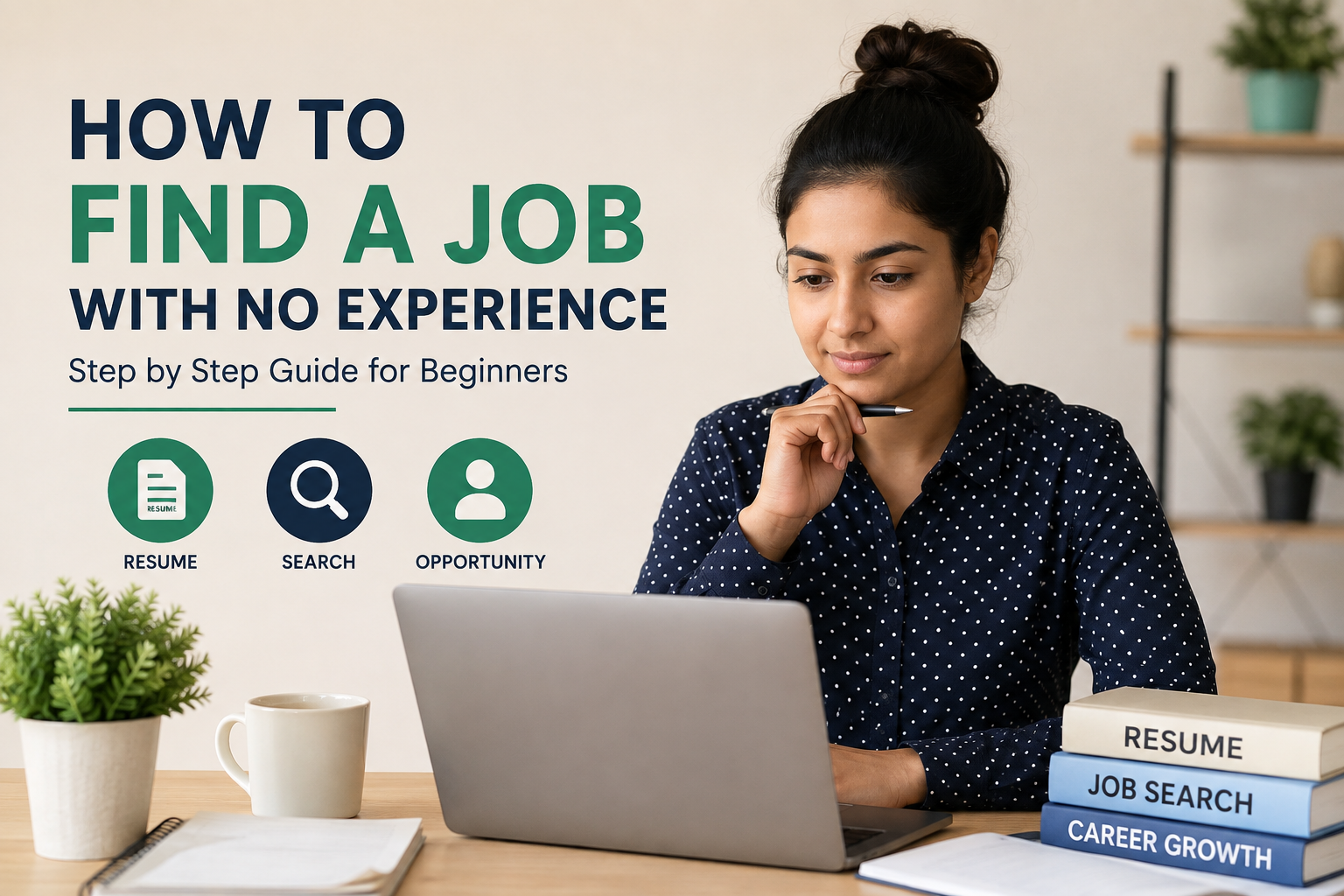
Finding a job without previous work experience can feel difficult, especially when most job advertisements seem to ask for experience. I believe this is one of the biggest challenges for students, fresh graduates, and people starting their careers. However, having no formal work experience does not mean you have nothing to offer.
When I think about finding a job with no experience, I focus on skills, confidence, learning ability, and the way a person presents themselves. Employers do not always expect beginners to know everything. Many companies are willing to hire people who show a positive attitude, basic skills, and a strong desire to learn.
In this article, I will share practical ways to find a job with no experience and explain how beginners can improve their chances of getting hired.
Understand What You Can Offer
The first step is to understand that you probably have more useful skills than you realize. You may not have worked for a company before, but you may have gained valuable abilities through school, college, personal projects, volunteering, family responsibilities, or online learning.
For example, if you have created presentations for school, you may have communication and presentation skills. If you have managed social media pages for a personal project, you may have basic social media marketing skills. If you have helped organize an event, you may have planning and teamwork experience.
I recommend making a list of everything you can do. Include computer skills, communication skills, writing skills, teamwork, organization, problem solving, and any technical skills you have learned.
Choose Entry Level Jobs
When you have no experience, it is better to search for entry level jobs rather than positions that require several years of experience.
Entry level jobs are designed for people who are starting their careers. Some common options include customer service representative, office assistant, sales assistant, receptionist, data entry worker, junior content writer, teaching assistant, social media assistant, and trainee positions.
You should carefully read the job description before applying. If a company says experience is preferred but not required, I would still consider applying if you meet most of the other requirements.
Do not reject yourself before the employer has a chance to review your application.
Create a Simple Resume
A good resume is extremely important when you are looking for a job with no experience. You may not have a long employment history, but you can still create a professional resume.
Start with your name and contact information. Then write a short career objective that explains what type of opportunity you are looking for and what you can bring to the company.
After that, include your education, skills, certifications, projects, volunteer activities, and relevant achievements.
Instead of leaving the experience section empty, use your resume to highlight practical activities. For example, if you completed a website project, mention what you created and which tools you used.
Keep your resume clear and easy to read. I personally believe that a simple resume is often better than a resume filled with unnecessary information.
Build Skills Before You Apply
One of the best ways to improve your chances of finding a job with no experience is to build useful skills.
Today, there are many free and affordable learning resources available online. You can learn computer skills, communication, graphic design, content writing, digital marketing, Excel, coding, customer service, or other skills related to your target job.
You do not need to become an expert before applying for your first job. Your goal should be to develop enough knowledge to demonstrate that you can learn and perform basic tasks.
For example, if you want an office job, learning Microsoft Excel, Word, email communication, and basic document management can make your resume stronger.
Create Personal Projects
Personal projects can be extremely useful when you have no professional experience.
Suppose you want to become a content writer. You can create a small blog and publish several original articles. If you want to work in graphic design, create sample designs for imaginary businesses. If you want to become a web developer, build a simple website.
These projects give you something practical to show employers.
I think personal projects are especially valuable because they prove that you are willing to take action instead of simply saying that you have a particular skill.
Look for Internships
Internships can be an excellent starting point for beginners. Some internships are paid, while others may be unpaid depending on the company and local rules.
An internship can help you understand how a workplace operates. It can also give you practical experience that you can later add to your resume.
If you are a student or recent graduate, I recommend checking internship opportunities regularly. Even a short internship can help you develop communication, teamwork, time management, and professional skills.
Use Your Network
Many people find their first job through someone they already know. This does not mean you need to have influential connections. Your network can include classmates, teachers, relatives, friends, former instructors, and people you meet through professional communities.
Let people know that you are looking for an entry level job. Tell them what type of work you are interested in and what skills you have.
You can also connect with professionals online and follow companies that interest you.
Networking is not about asking everyone for a job. It is about building genuine professional relationships and learning about opportunities.
Apply Even If You Do Not Meet Every Requirement
One mistake I see beginners make is assuming they must meet every requirement in a job advertisement.
Job descriptions often include a long list of desired qualifications. If you meet the main requirements and can learn the remaining skills, you may still be a reasonable candidate.
For example, if a job asks for one year of experience but you have strong skills, relevant projects, and a good educational background, applying may still be worthwhile.
Of course, you should never lie about your experience. Be honest about what you know and what you are still learning.
Prepare for Job Interviews
Getting an interview is only part of the process. You also need to prepare for common interview questions.
When you have no experience, employers may ask why they should hire you. Instead of focusing on what you lack, talk about your strengths.
You can explain that you are motivated, willing to learn, responsible, adaptable, and interested in developing your career.
Prepare answers for questions such as:
Why do you want this job?
What are your strengths?
What are your weaknesses?
Why should we hire you?
Where do you see yourself in the future?
Tell us about a project you completed.
Practice answering these questions naturally. I would avoid memorizing complete answers because your responses can sound robotic.
Improve Your Communication Skills
Communication is one of the most useful skills for almost every job. Even if you have excellent technical knowledge, poor communication can make it difficult to work with other people.
Practice speaking clearly and professionally. Improve your writing and learn how to write professional emails.
During an interview, listen carefully before answering. Maintain good body language and speak confidently.
You do not need perfect English or perfect communication skills to get a job. What matters most is that you can communicate your ideas clearly and respectfully.
Use Job Search Websites
Online job platforms can make the job search easier because you can search for positions based on location, industry, experience level, and skills.
Use keywords such as “entry level jobs,” “jobs for fresh graduates,” “no experience jobs,” “trainee jobs,” and “junior jobs.”
I recommend checking job listings regularly rather than applying once and waiting. Finding your first job can take time, so consistency is important.
Create a professional profile where possible and keep your information updated.
Customize Your Applications
Sending the exact same resume to every company is not always effective.
Before applying, read the job description and identify the most important skills. Then make sure your resume highlights relevant skills and projects.
You can also write a short cover letter when appropriate. Explain why you are interested in the position and how your skills can help the company.
A customized application shows that you have taken time to understand the position.
Do Not Get Discouraged by Rejection
Job rejection is normal, especially when you are starting your career. I believe it is important not to take every rejection personally.
You may apply for ten jobs and receive several rejections before getting an interview. Another person may apply for only a few positions and get hired quickly.
Everyone’s situation is different.
Instead of thinking that rejection means you are not good enough, use it as a reason to improve. Review your resume, practice interviews, learn another skill, and continue applying.
Consider Part Time and Freelance Work
If full time employment is difficult to find, consider part time jobs, freelance work, temporary positions, or project based opportunities.
These opportunities can help you gain practical experience while you continue searching for a permanent position.
For example, freelance writing, tutoring, virtual assistance, graphic design, customer support, or social media work can help you build a portfolio.
The experience you gain can later make your resume stronger.
Be Patient and Consistent
Finding a job with no experience is a process. It may take weeks or months, depending on your skills, location, industry, and the job market.
The most important thing is to keep improving while you search.
Set a daily or weekly goal for applications. Spend some time learning new skills. Practice interviews and update your resume when necessary.
I believe consistency is one of the biggest advantages a beginner can have. You may not have experience today, but every skill you learn and every project you complete can bring you closer to your first opportunity.
Final Thoughts
Finding a job with no experience is challenging, but it is absolutely possible. Your first job does not need to be your dream job. It can simply be the first step toward the career you want.
Focus on building useful skills, creating a strong resume, completing personal projects, applying for entry level positions, preparing for interviews, and developing professional relationships.
Most importantly, do not underestimate yourself because you have never worked before. Everyone who has a long career started somewhere. Your lack of experience today does not determine what you can achieve in the future.
If you stay patient, keep learning, and continue applying for suitable opportunities, you can increase your chances of finding your first job and starting a successful career.