Choosing a career after college can feel exciting, confusing, and sometimes stressful at the same time. After spending several years studying, completing assignments, attending classes, and preparing for exams, many graduates suddenly face one important question: what should I do next?
In my opinion, choosing a career after college should not be based only on salary or what other people expect from you. A good career should match your skills, interests, personality, goals, and lifestyle. It is also important to understand that your first career choice does not have to be perfect. Many people change jobs, learn new skills, or even change their entire career path later in life.
If you are a recent graduate and are wondering how to choose a career after college, I believe the best approach is to slow down, understand yourself, explore different opportunities, and then make a practical decision.
Understand Yourself Before Choosing a Career
The first step in choosing a career after college is understanding yourself. Before searching for jobs, I recommend thinking carefully about what you actually enjoy doing.
Ask yourself a few simple questions.
What subjects did I enjoy during college?
What type of work makes me feel interested?
Do I prefer working with people, computers, information, numbers, or creative ideas?
Do I enjoy solving problems?
Do I prefer working independently or as part of a team?
What kind of lifestyle do I want in the future?
These questions can help you understand your natural preferences. Sometimes students choose a degree because their family recommends it, and after graduation they realize that the actual work does not interest them. That is why self awareness is an important part of career planning.
Identify Your Skills
Your skills are another major factor when choosing a career after college. Your degree may open the door to certain opportunities, but your practical skills can help you move forward.
Make a list of your strongest skills. These could include communication, writing, research, programming, graphic design, accounting, organization, sales, leadership, problem solving, or teamwork.
I also suggest looking at skills you developed outside the classroom. Maybe you managed a college society, worked on a personal project, volunteered, created content online, helped with a family business, or completed an internship.
These experiences can give you valuable transferable skills.
For example, someone who studied business but has strong writing and communication skills might explore marketing, content creation, public relations, sales, or customer success. A computer science graduate who enjoys explaining technical concepts could consider technical writing, training, product support, or technology education.
Think About Your Interests
Interest is important because you are likely to spend many hours working throughout your career. If you completely dislike your work, earning a good salary may not always make you feel satisfied.
This does not mean you need to find a job that feels like a hobby every day. Every career has difficult and boring tasks. However, there should be some part of your work that keeps you interested.
I believe it is helpful to identify topics you naturally enjoy learning about. If you regularly watch videos, read articles, or search for information about a particular subject without being forced to do so, that may be a useful clue.
For example, someone interested in technology might explore software, cybersecurity, data, artificial intelligence, or digital products. Someone who enjoys helping people might consider education, human resources, customer service, healthcare administration, or social services.
Research Different Career Options
After understanding your interests and skills, start researching career options. Do not choose the first job you find simply because it is available.
Look at different career paths related to your education and skills. Research what people actually do in those roles, what qualifications employers expect, what skills are required, and what opportunities exist for growth.
Job descriptions can be particularly useful. When I research a career, I like to look at several job postings for the same position instead of relying on one description. This helps me notice the skills and qualifications that employers frequently request.
You may also discover careers you had never considered before.
Consider Job Demand and Future Opportunities
Passion is important, but practical considerations matter too. When choosing a career after college, I believe students should also think about job demand and future opportunities.
Some industries grow quickly, while others may offer fewer opportunities. Technology, digital services, healthcare, education, finance, marketing, and other industries can contain many different career paths, but the opportunities can vary by location and experience.
Instead of asking only, “What job pays the most?” I recommend asking, “Which career offers a reasonable combination of income, stability, growth, and personal satisfaction?”
A career with strong long term opportunities can give you more flexibility as you gain experience.
Do Not Choose a Career Only Because of Salary
Salary is obviously an important factor. Everyone has financial responsibilities, and it is reasonable to consider income when planning your career.
However, I would not recommend choosing a career only because it has a high starting salary.
A job may pay well but require a working environment, schedule, or responsibilities that you strongly dislike. On the other hand, a career with a modest starting salary may provide excellent opportunities to develop valuable skills and move into better positions later.
I think it is better to consider the complete picture. Look at salary, growth potential, work environment, location, flexibility, workload, benefits, and opportunities for learning.
Talk to People Who Work in the Field
One of the most useful ways to understand a career is to speak with someone who is already working in that field.
Ask them what their typical day looks like. Ask what they enjoy about the job and what they find difficult. You can also ask which skills helped them get started and what they wish they had known when they graduated.
Real world conversations can sometimes teach you more than reading dozens of career articles.
If you have professors, former classmates, relatives, friends, or professional contacts working in different industries, consider asking them for advice. Professional networking platforms can also help you discover people working in careers that interest you.
Gain Experience Before Making a Big Decision
You do not always need to make a permanent decision immediately after college. Internships, part time jobs, freelance projects, volunteering, and entry level positions can help you test a career.
For example, if you think marketing might be right for you, try managing social media for a small organization or working on a simple marketing project. If you are interested in programming, build a small project and see whether you enjoy the process.
Practical experience can help you discover whether your expectations match reality.
I personally believe that trying something is often better than spending months worrying about whether it might be right for you.
Learn Skills That Increase Your Career Options
The job market changes constantly, so learning should not stop after college.
Identify skills that are valuable in the career you want to pursue and start improving them. Online courses, tutorials, books, workshops, personal projects, and practical experience can all help.
For example, a graduate interested in digital marketing might learn search engine optimization, content writing, analytics, email marketing, and social media strategy.
Someone interested in technology might learn programming, data analysis, cloud technologies, cybersecurity, or other relevant technical skills.
The important thing is to avoid collecting certificates without developing practical ability. Employers often want people who can demonstrate what they can actually do.

Create Short Term and Long Term Career Goals
Once you have explored several options, create some simple career goals.
Your short term goal might be to find an internship, improve a particular skill, create a portfolio, or apply for entry level jobs.
Your long term goal might be to become a manager, specialist, consultant, business owner, or expert in your field.
Your goals do not need to be perfect. They can change as you gain experience.
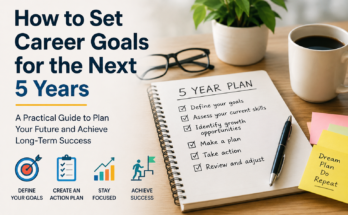
I recommend thinking about where you want to be in one year, three years, and five years. This gives you a direction without making you feel trapped by one decision.
Avoid Comparing Your Career With Others
One of the biggest mistakes graduates can make is comparing their career journey with their classmates.
Someone might get a job immediately after graduation while another person takes several months. Someone might earn more money at twenty three, while another person builds a business or develops a specialized skill.
Everyone has a different starting point.
Social media can make this comparison even worse because people usually share their achievements rather than their struggles. Instead of constantly comparing yourself with others, focus on building your own skills and experience.
Accept That Your First Career May Not Be Your Final Career
Choosing a career after college does not mean choosing one job for the rest of your life.
People change industries, learn new skills, start businesses, move into management, become freelancers, or discover completely different interests.
Your first job is often a learning opportunity. It can help you understand what you like, what you dislike, and what kind of working environment suits you.
If your first career choice does not work out, that does not automatically mean you failed. You may simply have learned something important about yourself.
Make a Decision and Take Action
After researching different career options, eventually you need to make a decision.
Do not wait for absolute certainty because it may never come. Gather enough information, compare your options, choose a reasonable direction, and take action.
Update your resume, build your professional profile, improve your skills, apply for suitable positions, contact people in your target industry, and keep learning.
Your career will become clearer as you gain experience.
Final Thoughts
In my view, learning how to choose a career after college is less about finding one perfect answer and more about understanding yourself and making thoughtful decisions.
Start by identifying your interests, skills, values, and goals. Research different career paths and consider job demand, income, growth, and work environment. Talk to professionals, gain practical experience, and continue developing useful skills.
Most importantly, remember that your career is a journey. You do not need to have everything figured out on graduation day. What matters is taking a sensible first step and being willing to learn and adjust along the way.
A good career is not simply about getting a job. It is about building a future that fits your abilities, goals, interests, and the kind of life you want to create.