When I think about career growth, I believe having a clear direction is much better than simply working hard and hoping that good opportunities will come along. A career can change in many ways over five years, but setting career goals gives me a better idea of where I want to go and what I need to do to get there.
A five year career plan does not mean that I have to predict everything about my future. Instead, it gives me a practical roadmap that I can review and change as my skills, interests, and opportunities develop. Whether I am starting my career, changing jobs, building professional skills, or aiming for a promotion, clear career goals can help me stay focused.
In this article, I will explain how I would set career goals for the next five years and turn those goals into realistic actions.
Why Five Year Career Goals Matter
Five years can seem like a long time, but it can pass surprisingly quickly. Without a plan, I may spend years doing the same work without developing new skills or moving closer to the career I actually want.
Setting long term career goals helps me understand what I want to achieve. It also makes it easier to identify the skills, experience, education, and professional relationships that I may need.
For example, if my goal is to become a manager within five years, I should not simply write “become a manager” and stop there. I need to think about leadership skills, communication, project management, decision making, and professional experience.
This is why I believe a good career plan should focus not only on the final position but also on the steps required to reach it.
Start With Your Current Career Situation
Before setting future career goals, I would first look honestly at my current situation. Understanding where I am today helps me create goals that are realistic and useful.
I would ask myself questions such as:
What skills do I currently have?
What type of work do I enjoy?
What parts of my current job do I like or dislike?
What are my strongest professional qualities?
Which skills do I need to improve?
What kind of career would make me feel satisfied?
What opportunities are available in my industry?
These questions can reveal the gap between my current position and where I want to be.
For example, I may discover that I have strong technical skills but need better communication skills. In that case, improving communication should become part of my career development plan.
Decide Where You Want to Be in Five Years
The next step is to create a clear picture of your ideal professional future. I would imagine where I want to be five years from now and describe that situation in practical terms.
Instead of saying “I want a successful career,” I would make the goal more specific.
I might want to become a senior employee, move into management, start a business, work remotely, change industries, earn a higher income, or become an expert in a particular field.
The goal should reflect what success means to me personally. There is no single definition of career success.
For one person, success may mean becoming a company leader. For another person, it may mean having flexible work and more time with family. Someone else may want to become a freelancer or build a successful online business.
The important thing is to create a career goal that genuinely matches my interests and priorities.
Break the Five Year Goal Into Smaller Goals
One of the most useful career planning strategies I use is breaking a large goal into smaller goals.
A five year goal can feel overwhelming when I look at it as one huge task. Breaking it into yearly and monthly objectives makes it easier to manage.
For example, my five year goal could be to become a senior professional in my field.
My first year could focus on improving important skills.
My second year could focus on gaining more practical experience.
My third year could involve taking responsibility for larger projects.
My fourth year could focus on leadership and professional networking.
My fifth year could involve applying for senior positions or moving into a leadership role.
This approach makes long term career planning much more practical.
Make Your Career Goals Specific
I believe vague goals are difficult to follow because they do not clearly explain what needs to happen.
For example, “improve my skills” is a weak goal. A better goal would be “complete two professional courses related to my field this year.”
Similarly, instead of saying “get a better job,” I could say “apply for five relevant positions each month after improving my resume and portfolio.”
Specific career goals make progress easier to measure.
Use the SMART Goal Method
The SMART goal method can also be useful when setting career goals. SMART stands for Specific, Measurable, Achievable, Relevant, and Time bound.
A specific goal clearly explains what I want to accomplish.
A measurable goal allows me to track progress.
An achievable goal should be realistic based on my current situation.
A relevant goal should support my overall career direction.
A time bound goal includes a deadline.
For example, instead of saying “I want to learn digital marketing,” I could set a goal such as “I will complete a digital marketing course within six months and use the skills to manage at least one real project.”
That gives me something concrete to work toward.
Identify the Skills You Need
Career growth is often connected to skill development. Once I know where I want to be in five years, I can identify the skills required for that position.
These may include technical skills, communication, leadership, problem solving, project management, writing, sales, or digital skills.
I would make a list of the skills I already have and compare them with the skills expected in my target career.
The difference between these two lists shows me what I need to learn.
I would then prioritize the most important skills instead of trying to learn everything at once.
Create a Professional Development Plan
Once I know which skills I need, I can create a simple professional development plan.
This plan might include online courses, books, workshops, certifications, practical projects, mentorship, or workplace responsibilities.
I believe practical experience is particularly valuable. Learning something is useful, but applying that knowledge to real situations helps me understand it much better.
For example, if I want to improve leadership skills, I could volunteer to lead a small project instead of only reading about leadership.
Build a Strong Professional Network
Career development is not only about qualifications and technical skills. Professional relationships can also create valuable opportunities.
I would make an effort to connect with people in my industry, attend professional events, participate in online communities, and communicate with experienced professionals.
Networking does not have to mean asking everyone for a job. It can simply mean building genuine professional relationships and learning from other people’s experiences.
Over five years, a strong professional network can become an important part of career growth.
Review Your Career Goals Every Year
A five year career plan should not be permanent. My interests and circumstances can change, and the job market can change as well.
That is why I would review my goals at least once every year.
I would ask myself what I have achieved, what I have learned, what has changed, and whether my original career direction still makes sense.
If my interests change, I can adjust my goals. Changing a career goal is not necessarily failure. Sometimes it means that I have learned more about myself and discovered a better direction.
Track Your Progress
Writing career goals down makes them easier to remember, but tracking progress makes them more useful.
I could maintain a simple document or notebook where I record completed courses, new skills, important projects, achievements, professional connections, and applications.
Seeing progress over time can also keep me motivated.
Even small achievements matter. Completing a course, improving a skill, receiving positive feedback, or successfully completing a difficult project can all be steps toward a larger career goal.
Do Not Ignore Personal Goals
Career goals should also fit into the life I want outside of work.
If I focus only on promotions and income, I may eventually realize that my career does not match my personal priorities.
When creating a five year career plan, I would consider work life balance, location, flexibility, family responsibilities, financial priorities, and personal interests.
A successful career should support a satisfying life rather than completely taking over it.
Stay Flexible
One thing I have learned about planning is that the future rarely follows the original plan exactly.
New opportunities can appear unexpectedly. Companies can change. Industries can evolve. New technologies can create completely different career paths.
Therefore, I would use my five year career plan as a guide rather than a strict rule.
The purpose of career planning is to give me direction while still allowing room for change.
Final Thoughts
Setting career goals for the next five years can make professional growth feel more organized and achievable. Instead of simply hoping that my career improves, I can decide what I want, identify the skills I need, create smaller goals, and regularly measure my progress.
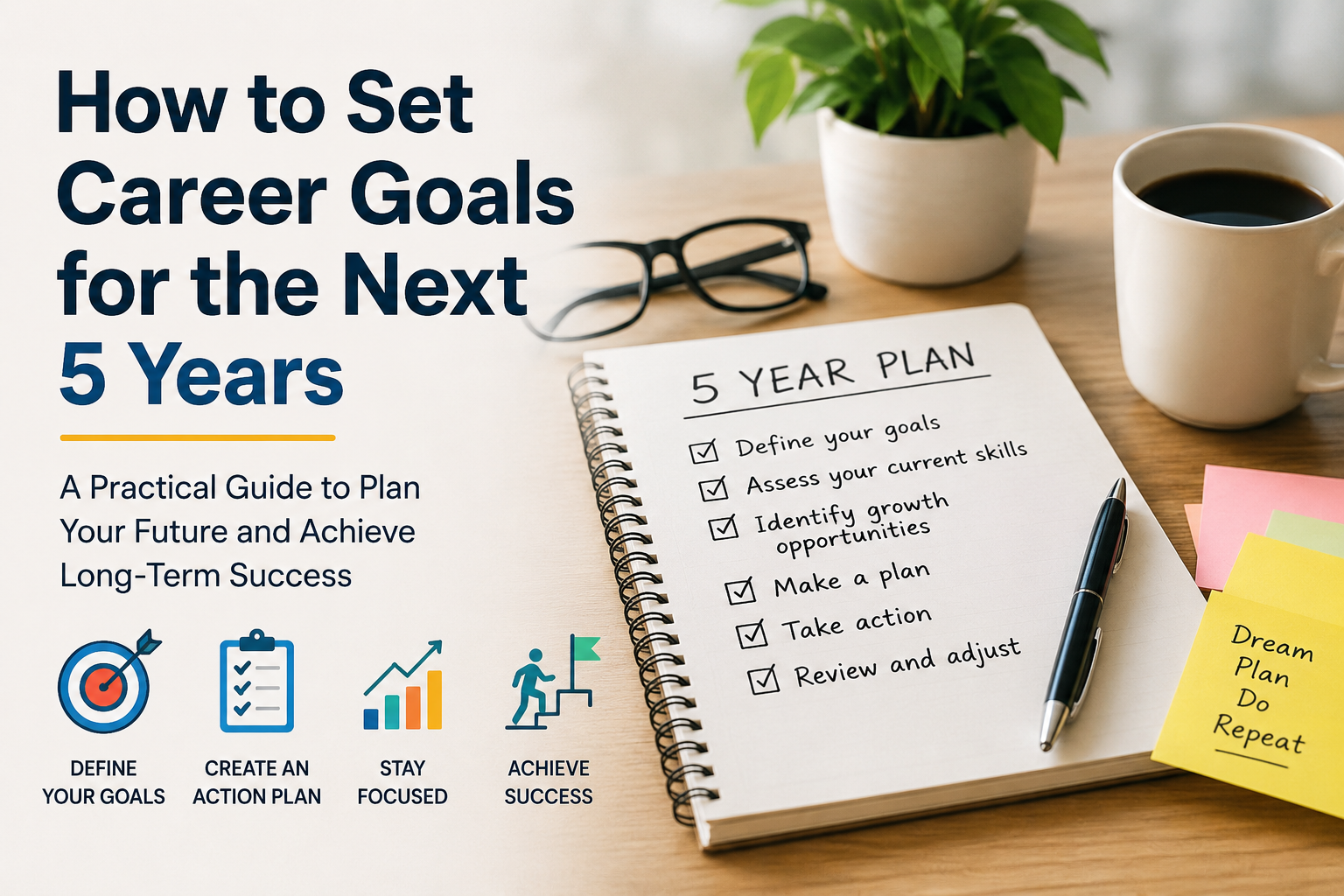
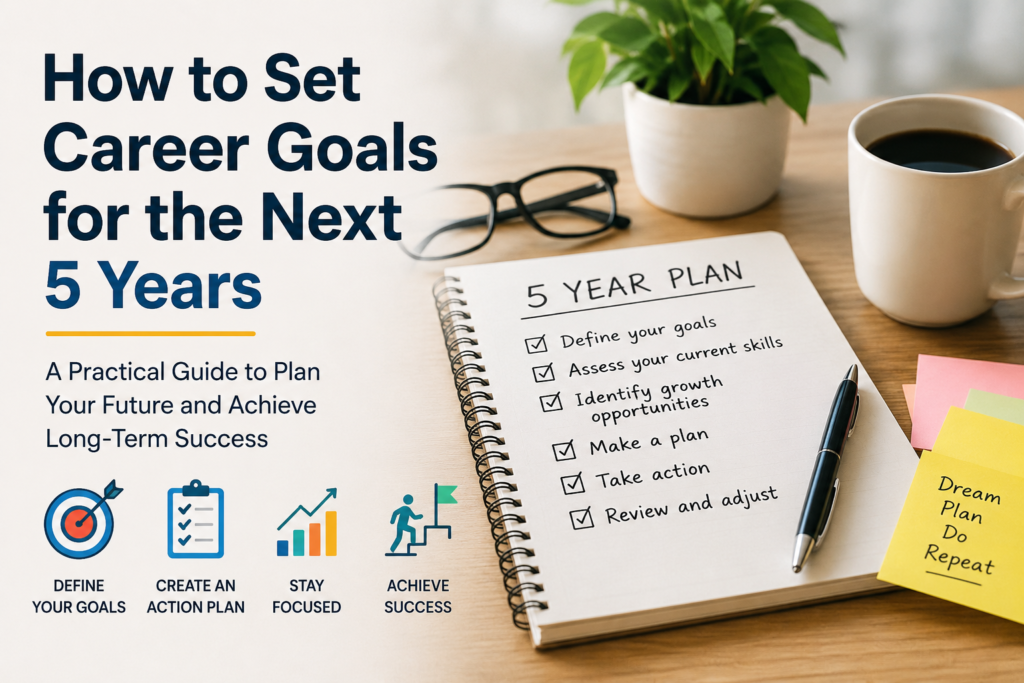
My approach would be simple. First, understand where I am today. Then decide where I want to be in five years. After that, break the goal into yearly and monthly steps, develop useful skills, gain practical experience, build professional relationships, and review the plan regularly.
I do not believe a perfect five year career plan needs to predict every detail of the future. A good plan should simply give me enough direction to take the next useful step.
The most important thing is to start. Even a small career goal can become meaningful when I work toward it consistently. With clear goals, patience, continuous learning, and a willingness to adapt, the next five years can become an important period of professional growth.