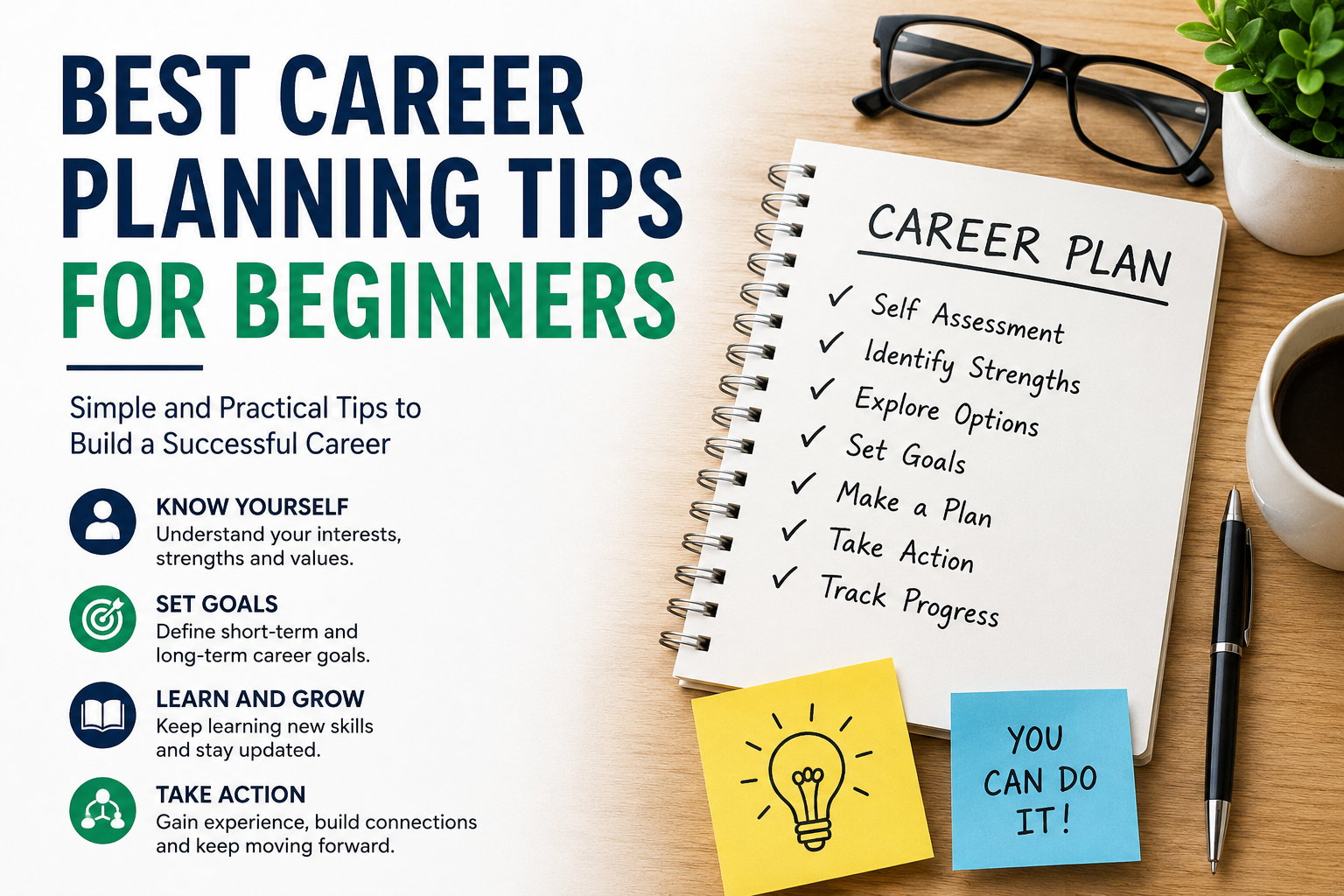
Starting a career can feel exciting, but it can also be confusing. When I was thinking about career planning, I realized that many beginners make the same mistake. They focus too much on choosing a job title and not enough on understanding themselves, their skills, interests, and long term goals. In my opinion, good career planning is not about finding one perfect career immediately. It is about learning what suits you and taking small steps toward a future that feels right.
Whether you are a student, a recent graduate, or someone thinking about changing direction, having a simple career plan can make your decisions easier. You do not need to have everything figured out today. You only need a clear starting point and a willingness to learn.
In this article, I will share some of the best career planning tips for beginners that I believe can help anyone build a more confident and practical career path.
Understand Yourself Before Choosing a Career
The first step in career planning is understanding yourself. Before searching for jobs or selecting a degree, I recommend spending some time thinking about what you actually enjoy doing.
Ask yourself a few simple questions. What subjects do I enjoy? What activities make me feel interested? What type of work do I find easy to understand? Do I prefer working with people, computers, numbers, ideas, or practical tasks?
Your interests can give you useful clues about possible career options. However, interest alone should not decide everything. You should also consider your strengths, personality, values, and preferred working environment.
For example, someone who enjoys explaining things and communicating with others might enjoy teaching, sales, marketing, customer service, or content creation. Someone who enjoys solving technical problems might prefer software, engineering, data, or information technology.
The more you understand yourself, the easier it becomes to explore suitable career options.
Identify Your Skills and Strengths
Another important career planning tip for beginners is to identify your current skills. You may already have useful abilities without realizing their value.
Think about both hard skills and soft skills. Hard skills include things such as writing, programming, graphic design, accounting, data analysis, or using specific software. Soft skills include communication, teamwork, problem solving, organization, creativity, and time management.
I believe beginners should not worry if their skill list is small. Everyone starts somewhere. The important thing is knowing where you are today and deciding what you want to improve.
You can make a simple list of your strongest skills and then compare them with the requirements of careers that interest you. This can help you identify skill gaps and create a learning plan.
Explore Different Career Options
One of the biggest mistakes beginners can make is choosing a career without researching it properly. A job may sound attractive when you hear about it, but the actual work may be very different.
Before making a decision, research several career options. Look at the typical responsibilities, required education, important skills, career growth opportunities, working environment, and possible challenges.
I recommend comparing at least three to five career paths instead of immediately choosing the first option you find interesting.
For example, if you enjoy technology, you could explore software development, cybersecurity, data analysis, technical support, web development, and other related fields.
Career exploration gives you more choices and helps you make decisions based on information rather than assumptions.
Set Clear Career Goals
Once you have explored different options, start setting career goals. Goals give your career planning process direction.
I find it helpful to divide goals into short term and long term goals.
A short term goal could be completing an online course, improving your communication skills, creating a resume, completing a project, or gaining an internship.
A long term goal could be becoming a manager, starting a business, becoming a specialist in your field, or reaching a particular professional position.
Your goals do not need to be complicated. In fact, simple goals are often easier to follow. Write down what you want to achieve and give yourself a realistic deadline.
Build Skills That Employers Value
A career plan becomes much stronger when you focus on developing useful skills. Education is important, but practical skills can also make a significant difference.
The skills you need will depend on your chosen career. For example, a digital marketing career may require knowledge of content creation, search engine optimization, analytics, and social media. A technology career may require programming, networking, databases, or cybersecurity knowledge.
I personally believe that beginners should avoid trying to learn everything at once. Choose one important skill and work on it consistently.
Online courses, books, tutorials, practical projects, workshops, and personal experiments can all help you develop your abilities.
Gain Practical Experience
Knowledge is valuable, but experience teaches you how to use that knowledge in real situations.
If you are a beginner, look for opportunities to gain practical experience. Internships, volunteer work, freelance projects, personal projects, part time work, and student activities can all help.
For example, if you want to become a writer, start creating your own articles. If you want to become a web developer, build simple websites. If you are interested in graphic design, create sample designs for your portfolio.
You do not always need a formal job to start gaining experience. Personal projects can demonstrate your skills and show potential employers that you are willing to learn.
Create a Strong Resume
A good resume is another important part of career planning for beginners. Your resume should clearly explain who you are, what skills you have, what experience you have gained, and what type of opportunity you are looking for.
If you do not have professional experience yet, do not think your resume has nothing to offer. Include education, relevant skills, certifications, internships, volunteer activities, academic projects, and personal projects.
Keep your resume simple and easy to read. Avoid adding unnecessary information. I believe a clear and honest resume is much better than a complicated resume filled with information that does not support your career goals.
Remember to customize your resume when applying for different positions. Highlight the skills and experiences that are most relevant to the particular opportunity.
Build Your Professional Network
Networking can sound intimidating when you are new to the professional world, but it does not have to be complicated.
Start by connecting with classmates, teachers, former colleagues, professionals, mentors, and people working in fields that interest you.
You can also attend career events, workshops, conferences, online communities, and professional discussions.
The goal of networking should not simply be asking people for jobs. Instead, focus on learning from others and building genuine professional relationships.
Sometimes a conversation with someone already working in your desired field can teach you more than hours of random online research.
Find a Mentor When Possible
Having someone experienced to guide you can make career planning easier. A mentor can share advice, explain industry expectations, review your goals, and help you avoid common mistakes.
Your mentor does not have to be a famous professional. It could be a teacher, experienced colleague, family friend, or professional you meet through networking.
When talking to a mentor, prepare specific questions. Ask about their career journey, important skills, common challenges, and what they would recommend to someone starting today.
At the same time, remember that your mentor can provide guidance, but you should make your own final decisions.
Keep Learning and Updating Your Skills
The job market continues to change, and skills that are valuable today may change in the future. That is why continuous learning is an important part of career planning.
I recommend developing a habit of learning something useful every week. It could be a new software tool, industry concept, communication technique, or technical skill.
You do not need to spend several hours every day studying. Even thirty minutes of focused learning can add up over time.
Keep an eye on developments in your chosen field and pay attention to the skills employers are increasingly requesting.
Do Not Compare Your Career Journey With Others
This is one of the career planning tips I consider especially important for beginners.
It is easy to look at someone else’s career and feel behind. You might see someone getting a job, earning more money, starting a business, or receiving a promotion while you are still figuring things out.
But every person’s career journey is different.
Instead of comparing yourself with other people, compare your current skills with where you were six months ago. If you have learned something new, gained experience, improved your communication, or become more confident, you are making progress.
Career development is not a race.
Review Your Career Plan Regularly
A career plan should not be treated as something you create once and never change. Your interests, skills, responsibilities, and goals can change over time.
I recommend reviewing your career plan every few months. Ask yourself whether you are still interested in your chosen direction, whether your skills have improved, and whether your goals still make sense.
If you discover that a particular career is not right for you, changing direction does not mean you failed. It means you learned something valuable about yourself.
A flexible career plan is often more useful than a rigid one.
Take Small Actions Every Day
Planning is important, but action is what creates progress.
You can spend months researching careers, watching videos, and making lists, but eventually you need to start doing something.
Choose one small action. Update your resume. Complete a lesson. Apply for an internship. Contact a professional. Start a project. Practice a skill.
Small actions may seem insignificant individually, but they can create meaningful progress when you repeat them consistently.
Final Thoughts
Career planning for beginners does not need to be complicated. In my opinion, the best approach is to understand yourself, explore your options, set realistic goals, develop useful skills, gain practical experience, and remain open to learning.
You do not need to know exactly where you will be ten years from now. Your first career decision does not have to determine your entire life either. What matters is creating a direction and being willing to adjust that direction as you learn more.
If you are just starting your career journey, take your time, research your options, and focus on building skills that can create real opportunities. Most importantly, do not wait until you feel completely ready. Start with what you know today and keep improving as you move forward.
A successful career is usually built through many small decisions, consistent effort, learning, and experience. With a practical career plan and the right mindset, beginners can take confident steps toward a rewarding professional future.