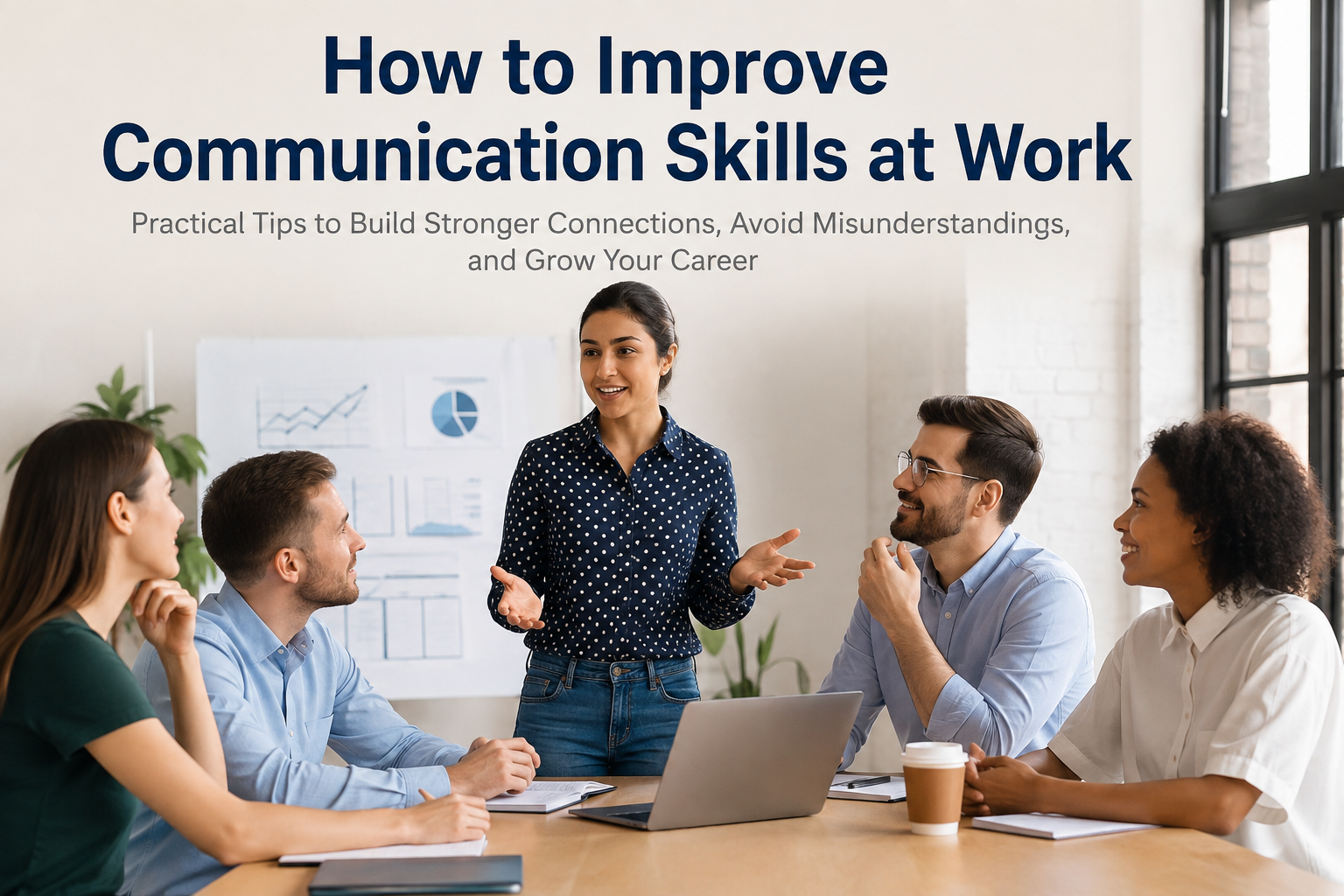
Good communication is one of the most valuable skills I believe anyone can develop for a successful career. No matter what type of job we have, we communicate with managers, coworkers, clients, customers, and business partners almost every day. The way we speak, listen, write, and respond can have a major effect on our professional relationships and career growth.
I have noticed that many workplace problems are not caused by a lack of knowledge or ability. They often happen because people misunderstand instructions, fail to listen carefully, or do not explain their thoughts clearly. This is why improving communication skills at work can make everyday tasks easier and help create a more positive professional environment.
In this article, I will share practical ways to improve communication skills at work based on simple habits that anyone can develop.
Why Communication Skills Matter at Work
Communication skills are important because almost every workplace task involves exchanging information. We need to understand instructions, share ideas, ask questions, provide updates, solve problems, and work with other people.
Strong workplace communication can help reduce misunderstandings and improve teamwork. It can also make a person appear more confident and professional.
From my point of view, good communication does not mean using complicated words or speaking constantly. It means making sure that other people understand what you are trying to say while also understanding what they are saying to you.
A person who communicates clearly can often build stronger professional relationships and handle difficult situations more effectively.
Practice Active Listening
One of the best ways to improve communication skills at work is to become a better listener.
Many people listen while thinking about what they want to say next. I believe this can create unnecessary misunderstandings. Instead, we should give the speaker our full attention and try to understand the complete message before responding.
When someone is speaking, avoid checking your phone or doing unrelated tasks. Look at the person when appropriate and pay attention to their words and tone.
It can also help to repeat important information in your own words. For example, you can say, “So you would like me to complete this report by Friday, correct?” This simple habit can prevent mistakes and shows that you are paying attention.
Speak Clearly and Confidently
Clear communication is easier when we organize our thoughts before speaking. Before explaining an idea, I try to think about the main point I want the other person to understand.
Instead of giving too much unnecessary information, focus on the most important details. Use simple language and explain things in a logical order.
Confidence is also important. Speaking confidently does not mean speaking loudly or dominating a conversation. It means expressing your thoughts calmly and clearly.
If you are unsure about something, there is nothing wrong with asking for clarification. In fact, asking a useful question is often better than making an incorrect assumption.
Improve Your Written Communication
Workplace communication is not limited to conversations. Emails, messages, reports, documents, and other written communication are also important.
I believe professional writing should be simple, clear, and easy to understand. Before sending an email or message, take a moment to read it again.
Check whether the purpose of the message is clear. Make sure the important information is easy to find and remove unnecessary sentences.
For example, instead of writing a long message about a simple question, you can explain the situation briefly and clearly state what you need.
Good written communication can save time and reduce confusion, especially when working with people who are not available for an immediate conversation.
Pay Attention to Body Language
Communication is also influenced by body language. Facial expressions, eye contact, posture, and gestures can affect how people understand our message.
For example, looking away constantly while someone is speaking may give the impression that you are not interested. Similarly, crossing your arms or appearing distracted can sometimes create the wrong impression.
I try to keep my body language natural and professional. Sitting or standing comfortably, paying attention to the speaker, and using appropriate eye contact can help create better conversations.
The goal is not to control every movement. It is simply to make sure your body language supports your words.
Think Before You Respond
One habit that can significantly improve communication skills at work is learning to pause before responding.
Sometimes we react quickly when we are stressed, frustrated, or surprised. This can lead to words that we later regret.
If someone gives you criticism or disagrees with your idea, take a moment to understand what they are saying. A calm response can often turn a difficult conversation into a productive one.
I believe professional communication becomes much easier when we focus on solving the problem instead of trying to win every argument.
Ask Better Questions
Asking questions is an important part of workplace communication. Good questions can help you understand tasks, expectations, and problems more clearly.
When receiving a new assignment, do not be afraid to ask about deadlines, priorities, or specific requirements.
Instead of saying, “I do not understand,” you can ask a more specific question such as, “Could you explain which part of the report should be completed first?”
Specific questions make conversations more useful and show that you genuinely want to understand the task.
Learn to Give and Receive Feedback
Feedback is an important part of professional growth. However, giving feedback requires care because the wrong words can make another person feel attacked.
When giving feedback, focus on the work or situation rather than attacking the person. Explain what could be improved and, when possible, suggest a practical solution.
Receiving feedback can also be difficult. Nobody enjoys hearing that they made a mistake, but I believe feedback can help us become better at our jobs.
Instead of becoming defensive immediately, listen carefully and consider whether the feedback can help you improve.
Communicate With Different Types of People
Every workplace has people with different personalities, communication styles, experiences, and expectations.
Some people prefer short and direct conversations, while others need more explanation. Some employees are comfortable speaking during meetings, while others communicate better through written messages.
Learning to adjust your communication style can make teamwork easier.
This does not mean changing your personality. It means understanding that one communication style may not work equally well with everyone.
Improve Communication During Meetings
Meetings are a common part of professional life, so knowing how to communicate during them is useful.
Before a meeting, review the topic and prepare any questions or updates you may need to share.
During the meeting, listen to other participants and avoid interrupting. When you have something important to say, keep your point focused.
If you disagree with someone, explain your reasoning respectfully. Saying, “I see your point, but I have another perspective,” can create a much better conversation than simply saying that someone is wrong.
After important meetings, confirm your responsibilities and deadlines so everyone understands what happens next.
Avoid Workplace Misunderstandings
Misunderstandings can happen even when people have good intentions. The best way to reduce them is to communicate clearly and confirm important information.
If instructions are unclear, ask questions. If a deadline changes, communicate it as soon as possible. If you notice a problem, do not wait until the last moment to mention it.
I have found that early communication is usually better than silence. A small issue can often be solved quickly when people discuss it openly.
Use Technology Wisely
Modern workplaces use email, messaging platforms, video meetings, and other communication tools. These tools are useful, but they can also create misunderstandings.
A short written message can sometimes sound rude even when the writer did not intend it that way. Before sending an important message, consider how the other person might interpret it.
For sensitive topics, a direct conversation or video call may be better than a long series of messages.
Choosing the right communication method is itself an important workplace communication skill.
Build Emotional Awareness
Emotional awareness can make communication much more effective. Before speaking, consider your own emotions and try to understand the emotions of others.
If a coworker seems frustrated, responding with more frustration may make the situation worse. A calm and respectful approach can help reduce tension.
Being aware of emotions does not mean avoiding difficult conversations. It means handling those conversations with patience and professionalism.
Practice Every Day
Communication skills improve through regular practice. You do not need to completely change your personality overnight.
Start with small habits. Listen more carefully during conversations. Think before responding. Write clearer emails. Ask better questions. Pay attention to your body language and learn from feedback.
I believe these small improvements can eventually make a noticeable difference in the way you communicate at work.
You can also ask a trusted coworker or manager for honest feedback about your communication style. Sometimes other people notice habits that we do not notice ourselves.
Final Thoughts
Learning how to improve communication skills at work is a valuable investment in your career. Good communication can help you work better with others, avoid misunderstandings, handle difficult situations, and express your ideas with confidence.
From my point of view, the most important part of workplace communication is not trying to sound perfect. It is trying to be clear, respectful, attentive, and honest.
If you practice active listening, speak clearly, improve your writing, ask useful questions, accept feedback, and pay attention to other people’s perspectives, your communication skills can gradually become much stronger.
The best thing about communication skills is that they can be improved at any stage of your career. Whether you are starting your first job or preparing for a leadership position, better communication can help you build stronger relationships and create more opportunities for professional growth.