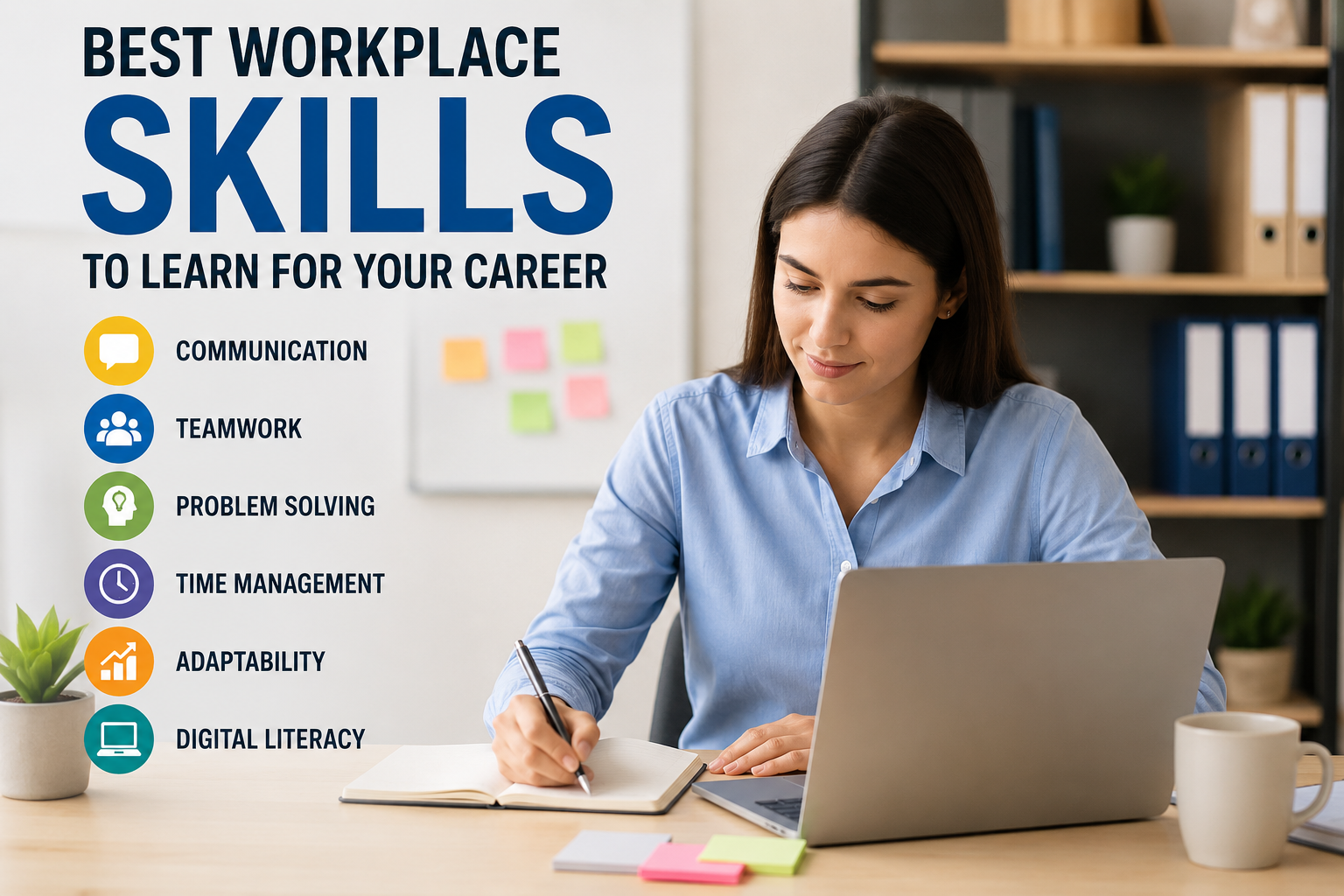
When I think about building a successful career, I believe having technical knowledge is only one part of the journey. A person can have a degree, experience, and professional qualifications, but workplace skills often make the biggest difference in how well someone performs and grows in a job. These skills help us communicate better, work with other people, manage responsibilities, solve problems, and adapt when things change.
In my opinion, the best workplace skills to learn are not limited to one profession. Whether you are starting your first job, looking for a better position, or trying to grow in your current career, improving these skills can make you more confident and valuable at work.
1. Communication Skills
Communication is one of the most important workplace skills for almost every career. I believe that people who can explain their ideas clearly usually find it easier to work with colleagues, managers, customers, and clients.
Good communication includes speaking, writing, listening, and understanding other people. It is not only about talking confidently. Listening carefully is equally important because it helps prevent misunderstandings.
You can improve communication skills by practicing clear emails, participating in discussions, asking thoughtful questions, and learning how to explain complicated ideas in simple language.
2. Teamwork
Most modern workplaces require employees to work with other people. Even if you have excellent individual skills, you may still need to cooperate with colleagues to complete important projects.
I consider teamwork an essential career skill because successful teams depend on trust, respect, communication, and shared responsibility. A good team member knows how to contribute ideas while also giving others the opportunity to speak.
You can develop teamwork skills by participating in group projects, helping coworkers when appropriate, accepting feedback, and learning how to handle different personalities professionally.
3. Problem Solving
Every workplace has problems. Some may be small, while others can have a major effect on a company or project. That is why problem solving is one of the best workplace skills to learn for your career.
In my view, strong problem solvers do not immediately panic when something goes wrong. They try to understand the situation, identify the cause, consider possible solutions, and choose a practical approach.
You can improve this skill by practicing logical thinking and asking yourself what caused a problem before deciding how to fix it. Learning from previous mistakes can also make you better at handling future challenges.
4. Time Management
Time is one resource that every employee has in limited supply. Good time management helps you complete important tasks without constantly feeling overwhelmed.
I believe time management is especially important when you have several responsibilities at the same time. Knowing how to prioritize tasks can help you focus on work that has the greatest impact.
Simple habits can make a big difference. I like the idea of creating a daily task list, setting realistic deadlines, avoiding unnecessary distractions, and dividing large projects into smaller tasks.
5. Adaptability
The workplace can change quickly. Companies introduce new software, employees take on new responsibilities, and business priorities can change without much warning.
For this reason, adaptability is an important workplace skill. Employees who are willing to learn and adjust can often handle change more effectively.
In my opinion, being adaptable does not mean accepting every change without thinking. It means staying open minded and finding ways to work effectively when circumstances are different from what you expected.
You can build adaptability by learning new tools, accepting new responsibilities, and treating unfamiliar situations as opportunities to learn.
6. Digital Literacy
Technology is now part of almost every career. Even jobs that were once mostly manual may require employees to use computers, online platforms, communication applications, or digital management systems.
Digital literacy means understanding how to use technology effectively and responsibly. Depending on your career, this may include word processing, spreadsheets, online communication, cloud storage, project management software, or other professional tools.
I believe improving your digital skills can make everyday work easier and can also create new career opportunities.
7. Leadership Skills
Leadership is not only for managers and company executives. Employees at every level can benefit from learning leadership skills.
A good leader knows how to take responsibility, support others, make decisions, and remain calm during difficult situations. Leadership also involves setting a good example.
Even if you are not currently managing a team, you can practice leadership by taking responsibility for projects, helping colleagues, sharing useful knowledge, and becoming someone others can rely on.
8. Emotional Intelligence
Emotional intelligence is another valuable workplace skill that is sometimes overlooked. It involves understanding your own emotions and recognizing the feelings of other people.
Workplaces include people with different personalities, opinions, expectations, and communication styles. Emotional intelligence can help you respond to difficult situations with patience instead of reacting immediately.
I think this skill becomes especially useful when dealing with disagreements, stressful deadlines, customer complaints, or workplace misunderstandings.
9. Critical Thinking
Critical thinking helps you evaluate information before making decisions. In many careers, employees receive large amounts of information and need to determine what is useful, accurate, or relevant.
Instead of accepting every piece of information immediately, critical thinkers ask questions and consider different possibilities.
You can develop critical thinking by comparing sources, examining evidence, asking why something happened, and considering alternative solutions before making important decisions.
10. Creativity
Creativity is not limited to artists, designers, or writers. Businesses in almost every industry need people who can think of new ideas and find better ways to solve problems.
In my opinion, creativity becomes particularly valuable when the usual approach is not producing good results. A creative employee may find a simpler process, suggest a new idea, or identify an opportunity that others have missed.
You can develop creativity by learning new subjects, exploring different perspectives, brainstorming ideas, and being willing to experiment with better approaches.
11. Professional Writing
Writing is an important workplace skill because employees often communicate through emails, reports, proposals, presentations, messages, and documentation.
Clear professional writing makes information easier to understand and can create a more positive impression. I believe every professional should learn how to write concise and respectful messages.
Before sending an important email or document, take a moment to check the grammar, spelling, structure, and purpose. Make sure the reader can quickly understand what you are trying to communicate.
12. Networking Skills
Building professional relationships can help you discover opportunities, learn from experienced people, and understand your industry better.
Networking does not have to mean attending large events and introducing yourself to strangers. It can be as simple as staying connected with former classmates, coworkers, teachers, industry professionals, and people you meet through professional communities.
I believe genuine networking is more valuable than simply collecting contacts. Focus on building respectful relationships and offering value when you can.
13. Conflict Resolution
Disagreements can happen in almost every workplace. People may have different opinions about deadlines, responsibilities, ideas, or working methods.
Conflict resolution skills help employees handle disagreements professionally. Instead of turning a small issue into a personal argument, it is better to focus on the problem and search for a reasonable solution.
Good listening, patience, respectful communication, and emotional control can make difficult workplace situations much easier to manage.
14. Decision Making
Employees regularly need to make decisions. Some decisions are simple, while others can affect projects, customers, or business results.
Good decision making involves gathering relevant information, considering possible outcomes, and choosing an appropriate course of action.
I think it is also important to understand that not every decision will be perfect. The goal is to make thoughtful decisions based on the information available and learn from the results.
15. Continuous Learning
Perhaps the most important career skill is the ability to keep learning. Industries change, technology develops, and employers often look for people who are willing to improve.
I believe you should never assume that your current skills are enough for the rest of your career. Learning can come from online courses, books, professional training, experienced colleagues, workshops, and practical experience.
Even spending a small amount of time each week learning something related to your career can produce significant results over time.
How to Choose the Right Workplace Skills
You do not need to learn every skill at once. I recommend starting with the skills that can make the biggest difference in your current situation.
If you are a beginner, communication, teamwork, time management, and digital literacy are good places to start. If you want to become a manager, leadership, decision making, conflict resolution, and emotional intelligence may deserve more attention.
Think about your current strengths and weaknesses. Ask yourself which skill could help you perform better at work or move closer to your career goals.
Final Thoughts
In my experience, career growth is not only about having technical knowledge. The way you communicate, manage your time, solve problems, cooperate with others, and respond to change can have a major impact on your professional life.
The best workplace skills to learn for your career are the skills that help you become dependable, flexible, confident, and effective. You do not have to become an expert overnight. Start with one skill, practice it regularly, and then move on to another.
A successful career is usually built through small improvements over time. If you continue learning and applying these workplace skills, you can become better prepared for new responsibilities, professional challenges, and future career opportunities.